PayDo keeps customer funds safeguarded, separate from its own money, as UK rules require for EMIs.
PayDo accounts are not covered by the FSCS, which applies to banks; safeguarding is how EMI client money is protected instead.
Several layers of security protect funds and personal data from unauthorised access.
Is PayDo safe? There is an important question to answer. We know the world of finance is a turbulent one. That’s why at PayDo, we’ve made safety and security our top priority as an EMI. PayDo is on a mission to help our clients use a safe and efficient payment ecosystem.
We provide:
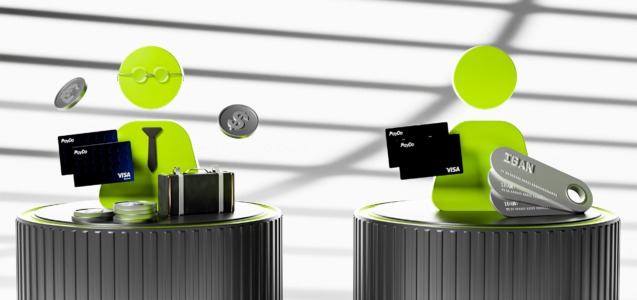
Dedicated multicurrency IBANs
5 payment schemes
59+ currencies
170+ destinations
Checkout Solution
No chargebacks, rolling reserves, holds
Instant settlements
Mass Payments
Instant payouts
Automatic payments en masse
VISA EUR Physical and Virtual Cards
For corporate needs
For employees
And most importantly, our experts developed all these services with safety and security in mind.
Is PayDo safe in general?
PayDo is safe for managing your finances. You can use it to send money, hold funds, or transact globally. PayDo is a regulated Electronic Money Institution (EMI). The platform operates under the regulatory supervision of the FCA (UK), MFSA (Malta), and FINTRAC (Canada). This ensures that we handle your money securely and responsibly.
What makes PayDo safe and secure?
PayDo incorporates many layers of security to protect your funds and information. From compulsory user verification to PCI DSS Level 1 compliance for merchant services. Our experts designed the platform with your safety in mind.
We made sure to safeguard customer funds.
What is safeguarding?
Safeguarding is a regulatory requirement for EMIs like PayDo. The system keeps all customer funds in top-tier banks separate from PayDo’s business accounts.
How does PayDo protect user funds against fraud and unauthorised access?
PayDo uses robust security measures. These include real-time fraud detection, Face ID/Touch ID, and 3D Secure (3DS) for card payments. These protect against unauthorised access and lower the chance of fraudulent activity.
Is PayDo safe and covered by FSCS?
PayDo accounts are not covered by the Financial Services Compensation Scheme (FSCS), which guarantees users only up to £85,000 if the traditional bank collapses. Instead, in line with UK regulations, PayDo employs mandatory safeguarding measures to protect customer funds. So, even if PayDo goes out of business, you will get 100% of your money back. This approach reflects our dedication to the safety and availability of customer assets without relying on external compensation schemes.
Can I trust PayDo with my money?
So, is PayDo safe? Yes, you can trust PayDo with your money. PayDo is a regulated EMI. It adheres to strict rules made to protect customers and their funds. With a focus on safeguarding, regulatory compliance, and advanced security features, PayDo is committed to maintaining a safe and reliable financial service for its users worldwide.
Create your Personal or Business Account right away and feel confident in our safe and efficient payment ecosystem yourself.
The 30-Second Summary The fastest way for a digital goods platform to pay sellers in Europe and the UK is an instant transfer: SEPA Instant for euros and Faster Payments...
The 30-Second Summary Low transaction fees look like the obvious way to compare payment providers. Skin store owners start with the rate on the price sheet because it is the...
The 30-Second Summary A payment gateway for a game key store has one job: get buyers’ card payments approved and keep the account open as volume grows. For game key...
The 30-Second Summary SEPA Instant sends euros within the SEPA area in up to 10 seconds, 24/7. SWIFT works in almost any currency, but a transfer usually takes 1–2 business...
The 30-Second Summary In the fast-paced and ever-changing iGaming industry, what are the current best online casino payment methods? Today, we are taking a snapshot for 2025, when the iGaming...
The 30-Second Summary A Money Services Business (MSB) is a type of financial institution that offers various money-related services, such as money transfers, currency exchange, and check cashing. It is...
The 30-Second Summary Electronic Money Institutions (EMIs) and Money Services Businesses (MSBs) are becoming more and more popular. EMIs focus on digital transactions, providing electronic payment services and digital currency...
The 30-Second Summary Phishing remains a major cybersecurity threat, targeting individuals and businesses through fraudulent emails, messages, and websites. According to the Anti-Phishing Working Group (APWG), 3.8 million phishing attacks...
The 30-Second Summary As digital payments continue to grow, payment fraud remains a significant concern. According to Alloy’s 2026 State of Fraud Report, 67% of surveyed financial institutions and fintechs...
The 30-Second Summary A bank account ownership certificate, also known as a bank account certificate or proof of account ownership, is a document that says your bank account actually belongs...
The 30-Second Summary A Company Registration Number (CRN) is a code a business gets during incorporation. It acts as a distinct identifier for your company. It helps to differentiate your...
The 30-Second Summary Imagine each bank branch with its unique postal code — that’s what a branch code or sort code is in the financial world. It’s a set of...