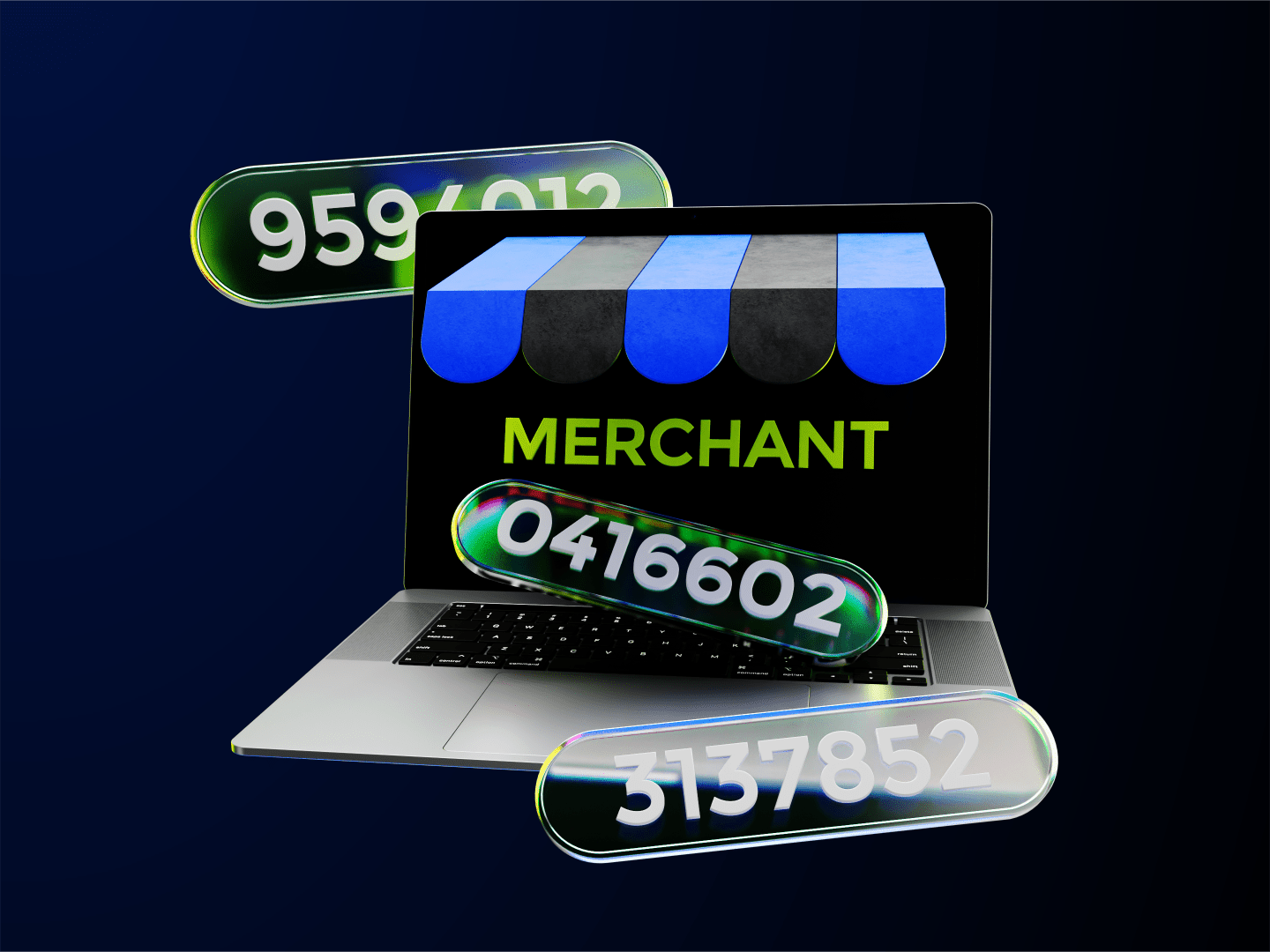
A Merchant ID (MID) is a unique number a payment processor or acquiring bank gives a business when it starts accepting card payments.
The MID makes sure every transaction is routed and settled to the right merchant, and it helps resolve disputes and chargebacks.
A MID identifies the whole business, while a terminal ID identifies one device or checkout point; share your MID only when needed.
A Merchant ID, or MID, is a unique identifier assigned to a business by its payment processor or acquiring bank when it starts accepting card payments. This ID is key for ensuring payments go to the right merchant account. Essentially, it’s the digital fingerprint of a business in the payment processing ecosystem.
A MID directs payment funds to the merchant’s account with precision.
A MID plays a pivotal role in preventing errors and fraud.
Let’s see what else we can say about MID to help you get the best out of it.
How Does a Merchant ID Work in Payment Processing?
Payment processing involves multiple parties working together.
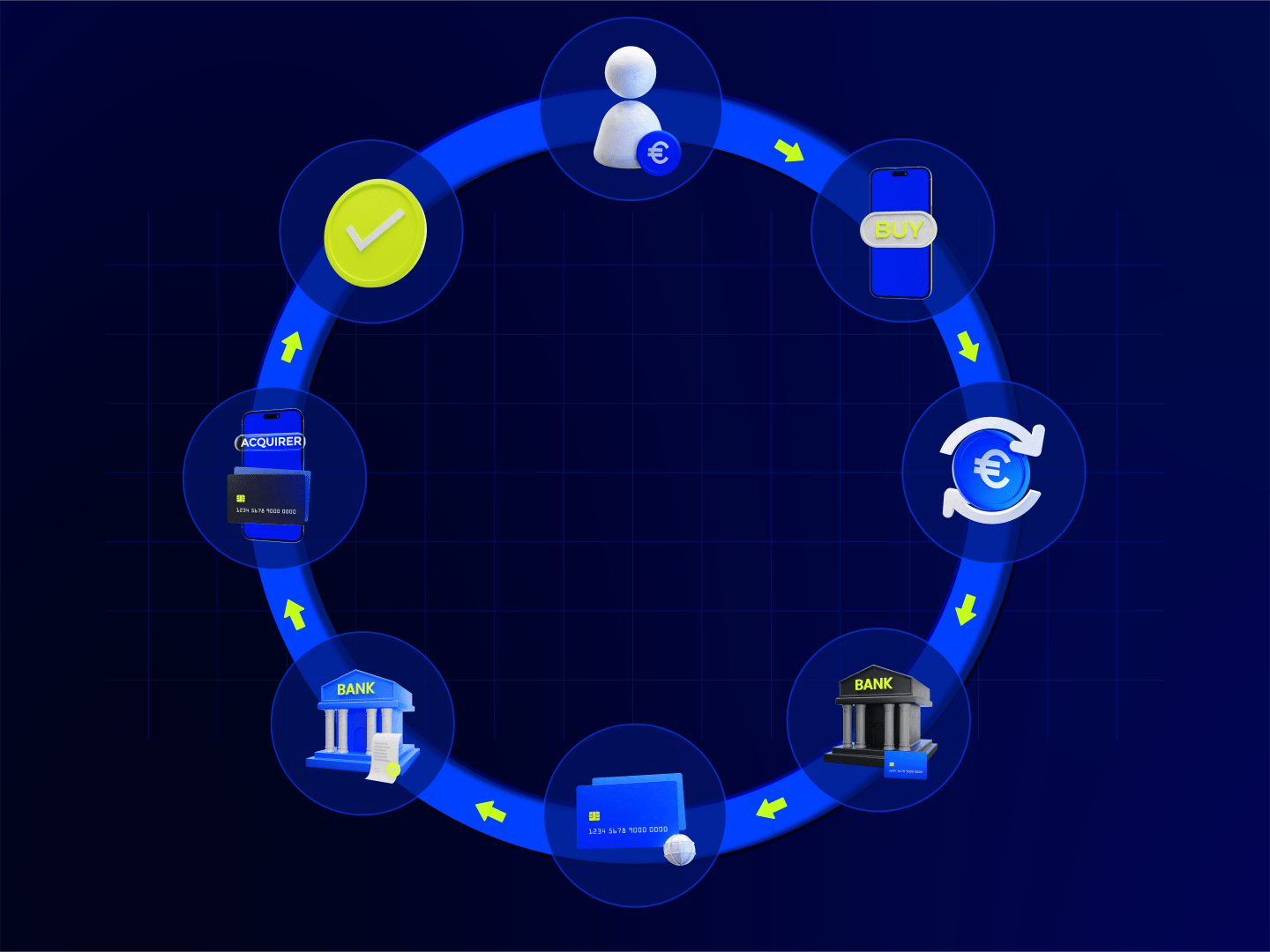
Here’s a simplified breakdown of the key players and their roles:
Customer. Initiates the transaction by purchasing using a credit or debit card.
Merchant. The business sells goods or services. They collect the customer’s payment information and forward it to their payment processor.
Payment Processor. Acts as the intermediary between the merchant and the financial institutions. It processes the payment on behalf of the merchant by sending the transaction details to the acquiring bank.
Acquiring Bank. The merchant’s bank receives the transaction details from the payment processor. It then communicates with the card network.
Card Network. This includes Visa, MasterCard, and others. The card network routes the transaction details to the issuing bank for approval.
Issuing Bank. The bank issues the customer’s card. It verifies the transaction, checks for sufficient funds or credit, and approves or declines it.
Acquirer. Receives the transaction approval or decline from the issuing bank via the card network and relays this information to the payment processor, who then informs the merchant.
Settlement. After approve, the transaction is settled, and the funds are transferred from the issuing bank to the acquiring bank and finally to the merchant’s account.
Why Is a Merchant ID Important for Your Business?
MID is crucial in this multi-step process to ensure each transaction attributes to the correct merchant. Every business receives a unique MID when they set up their merchant account. Companies use this ID at every transaction stage to track and manage payments accurately.
Imagine a customer purchasing a book from “ABC Books” online. A MID ensures that the payment for this purchase goes to “ABC Books” and not mistakenly to another merchant.
Introduction to the Seller’s Identifier (Merchant ID) and Its Role in Payment Processing
A MID is a unique numerical identifier the payment processor assigns to the merchant. It plays a vital role in the payment ecosystem by ensuring the correct routing of funds and minimizing errors.
Here’s how it works:
Transaction Initiation. When a customer purchases, the transaction details, including the merchant’s MID, go to the payment processor.
Routing and Approval. The payment processor uses a MID to route the transaction through the appropriate channels (acquiring bank, card network, issuing bank).
Settlement. A MID makes certain the funds reach the correct merchant account.
This identification system significantly reduces the risk of misdirected payments and allows merchants to receive their payments promptly and accurately. It also aids in managing chargebacks effectively, as a company can track and verify transactions using a MID.
Understanding Merchant ID
MID is a unique identifier assigned to a business by its payment processor or acquiring bank when it sets up a merchant account to accept card payments. This identifier acts as a digital fingerprint, allowing the payment processing system to recognize and route transactions to the correct merchant.
Detailed Description of How Merchant ID Prevents Errors in Transactions
A MID is integral to the payment processing system, ensuring accuracy and reliability. Here’s how it helps prevent errors:
Accurate Routing. A MID ensures that transaction details are routed through the correct channels, from the payment processor to the acquiring and issuing banks. This minimizes the risk of funds being directed to the wrong account. A customer purchases a book from “Book Haven.” A MID associated with Book Haven ensures the payment is correctly routed to another merchant selling similar products.
Verification and Settlement. During the verification process, a MID helps confirm that the transaction is legitimate and that the merchant is authorized to receive the payment. This reduces the chance of fraudulent transactions and errors in settlement. When “ABC Electronics” processes a transaction, a MID verifies that ABC Electronics is the payment recipient, ensuring no mix-up with another electronics store.
Chargeback Management. In disputes or chargebacks, a MID helps track and manage the transaction history accurately. This ensures that chargebacks are processed correctly and attributed to the correct merchant, assisting in efficient dispute resolution. If a customer disputes a transaction at “Gadget World,” a MID helps trace the transaction, ensuring that any chargeback is correctly handled without affecting unrelated transactions.
Importance of Keeping a Merchant ID Secure and Only Sharing It When Necessary
A MID is a critical component of a business’s payment infrastructure, and its security is paramount. Here’s why keeping a MID secure is crucial:
Preventing Fraud. Sharing a MID indiscriminately can expose the business to fraudulent activities. Unauthorized individuals could use a MID to process fake transactions, leading to financial losses and reputational damage.
Maintaining Transaction Integrity. By keeping a MID secure, businesses ensure that all transactions processed under their merchant account are legitimate and authorized. This helps maintain the integrity of their financial operations.
Minimizing Disputes and Chargebacks. Secure handling of a MID reduces the risk of disputes and chargebacks, as it prevents unauthorized transactions from occurring in the first place.
A MID is a vital identifier that ensures the accurate processing of transactions, protects against errors and fraud, and helps manage chargebacks efficiently. Businesses must treat their MID with the same level of security as other sensitive financial information, sharing it only when necessary to maintain the integrity of their payment processing systems.
How to Get a Merchant ID
You need to know several vital things when acquiring a MID.
Steps Involved in Obtaining a Merchant ID
Obtaining a MID involves several vital steps to ensure the business is legitimate and capable of processing card payments. Here’s a detailed overview of the process:
Research and Choose a Merchant Service Provider. The first step is to find a reputable merchant service provider or acquiring bank that offers the necessary payment processing services.
Application Process. Apply to the chosen provider detailing your business’s operations, expected transaction volumes, and other relevant information.
Review and Approval. The provider reviews the application, assessing the business’s risk level and suitability for a merchant account.
Partnership with a Merchant Service Provider or Acquiring Bank
Forming a partnership with a merchant service provider or acquiring a bank is essential for obtaining a MID. This relationship is crucial for several reasons:
Transaction Processing. The provider facilitates the processing of card payments, ensuring funds are correctly routed and settled into the merchant’s account.
Support and Services. Providers offer various support services, including fraud detection, chargeback management, and customer service, which are vital for seamless operations.
Compliance and Security. Acquiring banks and service providers ensures merchants comply with industry standards and regulations, such as PCI DSS, to protect sensitive card information.
Required Documentation and Verification Process
To obtain a MID, businesses must provide several documents and undergo a thorough verification process. This helps the provider verify the legitimacy and financial stability of the company:
Business Information. Details about the business structure, ownership, and operational model.
Financial Statements. Recent bank statements and financial records to assess the business’s economic health.
Tax Information. Tax identification numbers and related documentation to ensure compliance with tax regulations.
Personal Identification. Identification documents of the business owners or principals to verify their identities.
Duration and Permanence of a MID Once Obtained
Once a business gets MID, it typically remains with the business for the duration of its relationship with the merchant service provider or acquiring bank. Here are some key points to consider:
Long-Term Use. a MID is designed for long-term use, remaining valid as long as the business continues its partnership with the provider and complies with the terms of service.
Stability and Consistency. Maintaining the same MID ensures stability and consistency in transaction processing and record-keeping.
Reapplication for New ID. The business must reapply for a new one if a MID is revoked due to excessive chargebacks or non-compliance.
By following these steps and maintaining a solid partnership with a merchant service provider, businesses can obtain and retain an MID that facilitates smooth and secure payment processing.
FAQ
What is the difference between a MID and a terminal ID?
A merchant ID identifies the business across the entire payment network, while a terminal ID identifies a specific physical device or online checkout point used for transactions.
Can a business have multiple Merchant IDs?
Yes, businesses often use multiple MIDs to separate different sales channels, product categories, or geographic regions for better reporting and risk management.
Do I need a new MID if I change my payment processor?
Yes, each payment processor or acquiring bank issues its own unique MID, so switching providers requires setting up a new identifier.
Conclusion
A MID is critical for any business accepting card payments. It ensures accurate routing and transaction settlement. And prevents errors as well as helps in managing disputes along with chargebacks.A MID gives each business a unique ID. It is key to the payment system’s integrity and efficiency. Similarly, PayDo, as a payment ecosystem, is the key to business growth. Open a Business Account today, transact in 59+ currencies, and reach more than 170 destinations.
The 30-Second Summary The fastest way for a digital goods platform to pay sellers in Europe and the UK is an instant transfer: SEPA Instant for euros and Faster Payments...
The 30-Second Summary Low transaction fees look like the obvious way to compare payment providers. Skin store owners start with the rate on the price sheet because it is the...
The 30-Second Summary A payment gateway for a game key store has one job: get buyers’ card payments approved and keep the account open as volume grows. For game key...
The 30-Second Summary SEPA Instant sends euros within the SEPA area in up to 10 seconds, 24/7. SWIFT works in almost any currency, but a transfer usually takes 1–2 business...
The 30-Second Summary In the fast-paced and ever-changing iGaming industry, what are the current best online casino payment methods? Today, we are taking a snapshot for 2025, when the iGaming...
The 30-Second Summary A Money Services Business (MSB) is a type of financial institution that offers various money-related services, such as money transfers, currency exchange, and check cashing. It is...
The 30-Second Summary Electronic Money Institutions (EMIs) and Money Services Businesses (MSBs) are becoming more and more popular. EMIs focus on digital transactions, providing electronic payment services and digital currency...
The 30-Second Summary Phishing remains a major cybersecurity threat, targeting individuals and businesses through fraudulent emails, messages, and websites. According to the Anti-Phishing Working Group (APWG), 3.8 million phishing attacks...
The 30-Second Summary As digital payments continue to grow, payment fraud remains a significant concern. According to Alloy’s 2026 State of Fraud Report, 67% of surveyed financial institutions and fintechs...
The 30-Second Summary A bank account ownership certificate, also known as a bank account certificate or proof of account ownership, is a document that says your bank account actually belongs...
The 30-Second Summary A Company Registration Number (CRN) is a code a business gets during incorporation. It acts as a distinct identifier for your company. It helps to differentiate your...
The 30-Second Summary Imagine each bank branch with its unique postal code — that’s what a branch code or sort code is in the financial world. It’s a set of...