
A young AI company has a signed customer, a working product and a founder ready to invoice. What it does not have is a business account, because the application is still “in review”. Three weeks later, it still is.
The story is not unusual. Ask founders and finance leads at SaaS, AI, software and data companies what went wrong with their payment setup, and the same handful of complaints come back, usually several at once. According to the PayDo analytical report, based on eternal custdev with 200+ companies, each second tech company is struggling with finding the payment provider that can cover all basic business needs. The companies differ. The problems barely do.
Six of them dominate.
1. Onboarding that outlasts the first invoice
Opening a business account at a bank or e-money institution commonly takes weeks, and at some banks it stretches into months. The delay tends to come from two places. Document requests are written for a different kind of company, so a two-person SaaS startup is asked for paperwork designed for a manufacturer. And the application sits in a queue where nobody owns it.
For early-stage AI and SaaS founders the cost is direct. The weeks between “ready to trade” and “able to trade” are cash flow, not admin.
2. Rejection based on where the company is registered
Some of the strongest engineering talent sits in places that mainstream providers treat as problems by default: Eastern Europe, the Caucasus, Central Asia, South Asia, parts of Africa. A company incorporated there can see its application declined before anyone has looked at what it actually does.
The mechanism is the blanket country rule. A short list of accepted jurisdictions, and a no for everything else. IT services and outsourcing firms in the CIS and Eastern Europe feel this most, along with AI and ML teams that hire where the talent is rather than where the banks are comfortable.
3. The account that goes dark without warning
Founders raise this one unprompted, often quietly. An automated compliance flag trips, the account is restricted, and the explanation arrives late or never. Payroll is due on Friday.
Automated monitoring is not the problem. Every regulated provider needs it, and regulators expect it. The problem is what follows a flag, when the only route to a human is a web form or a chatbot. Teams do not mind being asked questions. They mind being locked out while nobody asks them.
4. Support that does not know the business
Chat-only help desks. Bots that answer questions nobody asked. A different agent on each contact, each starting from zero.
For a company with a custom API integration, this gets expensive quickly. An engineer waits on a ticket while a production issue stays open. AI, ML and SaaS teams with bespoke integrations are the most exposed, because their problems are rarely the ones a script was written for.
5. Multiple providers, multiple agreements, multiple reconciliation files
No one designs a fragmented payment stack. It accumulates. One provider for the IBAN, another for cards, a third for acquiring, a fourth for FX. Each was a reasonable decision in the month it was made.
Then the finance lead spends the first week of every month matching four reports that disagree, and each new market adds another agreement. For SaaS, data and analytics, and cybersecurity companies trying to shorten their vendor list, this is often what finally triggers a search for something new.
6. The fees nobody mentioned
The quoted price is rarely the whole price. Charges for investigating a transfer, cancelling one, producing a statement, adding a user or closing an account tend to appear only when they are applied. A pricing page lists what is easy to list.
The practical advice from anyone who has been caught out is to ask for the complete fee schedule in writing before signing, not just the rate on the website.
What a better setup looks like
Read together, the six problems point to the same shortlist of questions for any provider under consideration:
- How long does onboarding take for a company of this size and type, and who owns the file?
- Is the company’s country accepted, and on what basis?
- Who is the contact when an account is flagged?
- Does the provider know the client’s industry, or does it need it explained?
- How many agreements and dashboards are needed to cover account, cards, acquiring and FX?
- What does the full fee schedule look like, in writing?
A provider that answers in specifics has probably done this before. One that answers in generalities may be learning from the customer.
Where PayDo fits
These are the questions PayDo was built to answer. By the company’s own count, about half of the tech companies that approach it arrive with three or more of the problems above, which has shaped how the service is set up.
On onboarding, PayDo asks for the documents relevant to the business and assigns a named account manager to the file from the first day, with a compliance team that works with technology companies daily. On geography, its list of prohibited jurisdictions is short and applications are assessed on the business itself. Companies from Ukraine, Georgia, Armenia, Azerbaijan, Moldova, Kazakhstan, Uzbekistan, Pakistan, Bangladesh, Nigeria, Egypt, Serbia, North Macedonia and Turkey are among those it works with, subject to the same checks as every other applicant.
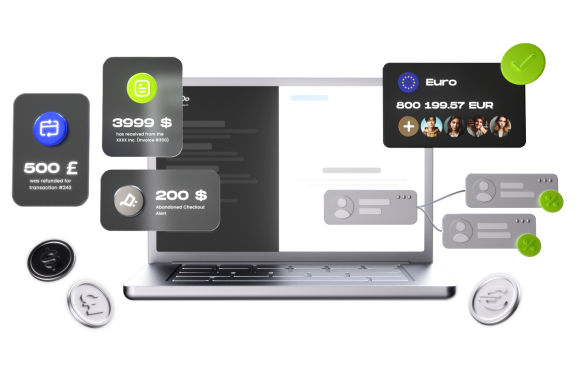
When something on an account needs review, it becomes a conversation with the account manager, who already knows the client’s business, rather than an automatic cut-off. Each client has a dedicated Key Account Manager reachable by email, messenger or call. Account, cards, acquiring and FX sit under one agreement in one dashboard, and pricing is set out before the client signs.
PayDo will be at Web Summit Lisbon from 9 to 12 November, booth 451, and Founder and CEO Serhii Zakharov is speaking on a panel about payments for digital businesses. Anyone who recognised their own company in this list is welcome to stop by. The team will go through a current setup, however untidy, map where the money changes hands, and say honestly whether PayDo is the right fit.