The 30-Second Summary
- A personal account supports individual expenses and savings, while a business account is built for company payments, invoicing and accounting.
- Mixing personal and business money complicates bookkeeping and can weaken liability protection for incorporated businesses.
- A business account becomes a must once you form a corporation or LLC, accept customer payments or run payroll.
The difference between business and personal bank account is something that every up-and-coming entrepreneur must understand. A personal account supports individual expenses and savings. A business account is built for trade, payments, compliance, and growth. Choosing the right one early helps avoid confusion, legal risk, and unnecessary problems.
Why It Matters to Separate Personal and Business Banking
Learning to separate business and personal banking matters simply because even today, new business owners may not fully grasp what is wrong with just using their personal account for business expenses. Opening a new bank account can be intimidating, but it is the price of clarity and control. When business income and expenses run through the same account as household purchases, it becomes difficult to understand where one type of spending ends and another begins.
Clear separation takes care of that: you get clear financial records that only pertain to your business, and the taxes for business vs personal bank account apply to two separate spaces as they should. Accountants can work faster, reports are easier to verify, and errors are less likely. It also protects you legally. For incorporated businesses, mixing funds can weaken liability protection and expose personal assets to business disputes.
There is also a practical side. There are certain expectations from clients, partners, and payment providers about how businesses should handle their operations – usually, through dedicated accounts. Receiving payments through a personal account can raise questions and paint your attitude towards business finances as unprofessional. Over time, clean separation saves effort, supports steady growth, and just makes you look better.
What a Personal Bank Account Offers
A personal bank account is great for mundane everyday use. Here is a list of things that are perfectly okay to do with your personal bank account:
- receiving a salary
- paying bills
- transferring money to family
- managing savings
- buying groceries
- paying for a gym membership
- doing your own taxes
- paying rent
Most personal accounts are easy to open and require limited documentation. Fees are usually low, and digital banking tools cover basic needs like card payments and online transfers. For personal finances, this simplicity is a benefit.
However, personal accounts are not suitable for commercial activity. Many banks restrict their use for business purposes. Transaction limits are lower, incoming payments may be flagged, and accounting visibility is limited. In the discussion of business bank account vs personal, personal banking is built for private life, not for operating a company.
What a Business Bank Account Provides
Business bank accounts exist to support business needs. This means special features that simplify trade, more detailed financial oversight, and clearance to move larger sums of money. Personal bank accounts will oftentimes have strict limits for online purchases or cross-border transactions, but a business needs way more money to run. A bank account that exist specifically to support business goals allows companies to:
- receive customer payments
- pay suppliers
- manage payroll
- track performance accurately
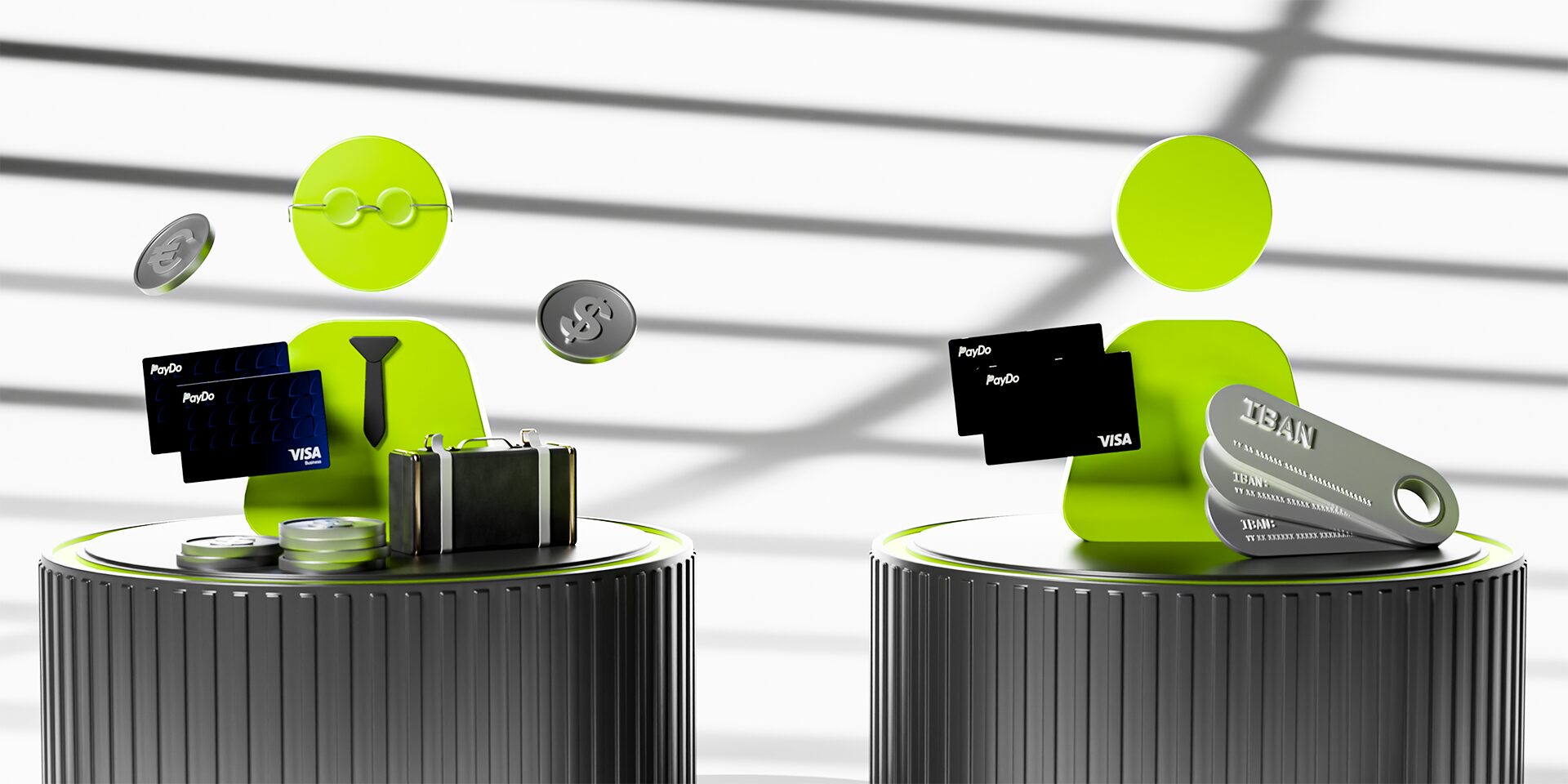
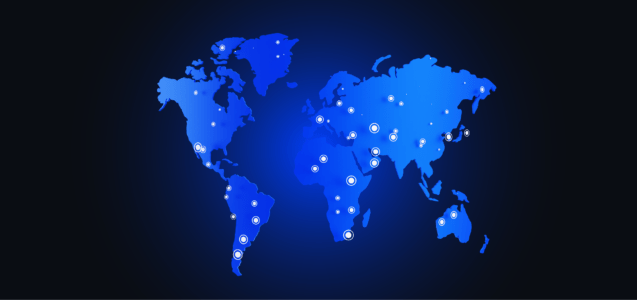
Modern providers like PayDo extend these capabilities further. We believe that the future will belong to unified financial ecosystems that gather as many offers as possible under the same roof. With us, businesses can open multicurrency dedicated IBANs, issue virtual and physical cards, and access a merchant account that supports both B2B and B2C operations. With support for over 60 currencies, coverage across 160 countries, and more than 350 alternative payment methods, PayDo enables companies to operate internationally without complexity.
In the business vs personal bank account comparison, a business account offers structure, scale, and tools that personal banking cannot provide.
Key Differences Between Personal and Business Banking
Understanding the difference between personal and business banking requires looking beyond the account name. The differences affect how money moves, how records are kept, and how the business is perceived.
Account Opening Requirements and Documentation
Personal accounts typically require proof of identity and address. Business accounts require additional documentation such as registration records, ownership details, and business addresses.
These requirements exist to meet regulatory standards and protect all parties involved. While the process is more detailed, providers like PayDo streamline onboarding through digital verification, reducing delays and paperwork. This distinction is central to business banking vs personal banking.
Fee Structure and Transaction Limits
Fees and limits tend to be different for business vs personal bank accounts. Personal accounts often include basic services with minimal fees, but they impose limits on transaction volumes and incoming payments. Business accounts are structured differently. Fees reflect higher activity levels and access to specialized services.
Business accounts support larger transfers, mass payouts, and international payment rails such as SEPA, SEPA Instant, SWIFT, and FPS. In the business bank account vs personal discussion, these capabilities justify the cost by enabling smoother operations.
Integration with Business Tools and Accounting Systems
Personal accounts rarely integrate with accounting or operational tools. Business accounts are designed to work alongside them.
PayDo connects banking with invoicing, reporting, and team access. Businesses can assign roles through team member features, manage spending with card controls, and automate payouts. These business banking features reduce manual work and improve financial oversight.
Common Issues When Mixing Personal and Business Accounts
For small business owners that are still new to the game, business banking may still seem like a foreign concept. There is a lot of paperwork, and you have to familiarize yourself with a world of corporate finance that is as new as it is time-consuming. The temptation to start out with just your personal account is understandably strong – it’s what you have and what you know at this stage. However, as time goes by small inefficiencies snowball into greater confusion in records and you face higher and higher risk of tax errors.
…And that would only be the start of your problems. Here are more areas that will take a hit upon mixing business and personal finance:
- Credibility. Looking for investors will be complicated without clear records. Differentiating business bank account vs personal spending is a sign of basic professionalism, and any overlaps between private and business purchases will make it harder to prove you deserve extra funding.
- Compliance. Banks may restrict or close accounts used outside their intended purpose. Mixing funds can also complicate audits and legal reviews. In every comparison of business vs personal bank account, this risk stands out as avoidable with early separation.
- Safety. Distributing funds between separate accounts means doubling the security measures, and you get even more protection if your business is registered as a corporation of an LLC. On the flipside, pooling your finances in the same account means losing everything if it gets compromised.
When a Business Account Is a Must (Not Optional)
A business account is a strong recommendation for all businesses, but there are certain instances when it becomes more than that – a non-negotiable requirement.
Forming a Corporation or LLC
When you register a legal entity, financial separation is essential. A business account establishes the company as distinct from its owners. Without it, liability protection may be challenged. This legal reality reinforces the difference between business and personal bank account.
Accepting Payments from Customers or Using Payroll
If you accept customer payments, issue invoices, or pay employees, a business account becomes necessary. Payment processors and payroll services require accounts in the company’s name. This is a clear example of business banking vs personal banking in practice.
How to Choose the Right Bank Account for Your Needs
Choosing the right account depends on how your business operates today and how it may grow tomorrow.
Evaluate Features, Fees and Support
Look closely at transaction costs, supported currencies, and payment options. Reliable customer support matters, especially when dealing with international transfers or compliance checks. In the business bank account vs personal evaluation, transparency and responsiveness make a measurable difference.
Consider Growth Potential and Integrations
A good account should support expansion. PayDo offers mass payouts, card issuance, and global transfer options through a single platform. These tools help businesses avoid switching providers as volumes increase. This flexibility defines the difference between personal and business banking.
The Role of Fintech and Digital Banking
Fintech has reshaped how companies manage money. Digital business banking focuses on accessibility, automation, and international reach. Instead of branch visits, businesses gain real-time control and faster settlement.
PayDo operates as an all-in-one EMI, combining regulated infrastructure with modern tools. We are proud of our unified approach, in which you get full access to our solutions after one contract and one integration. For companies managing cross-border operations, this supports efficiency without sacrificing oversight. In the broader view of business banking vs personal banking, fintech solutions now set the standard for commercial use.
Make the Right Banking Choice for Your Business
Understanding the difference between business and personal bank account helps business owners avoid preventable problems. Personal accounts serve individuals well, but they are not built for commerce.
A business account provides clarity, compliance, and the ability to scale. With PayDo, companies gain access to global payment solutions, multicurrency accounts, and tools designed for real business needs. Making the right choice early supports stability and long-term confidence.
FAQ
Can I use a personal account for business activity?
You technically can, but you should not – it is more trouble than it is worth in the long run. Using a personal account for business transactions is often restricted by banks. As soon as transaction volumes pick up, you are likely to encounter tax and compliance problems. Save yourself the trouble – set up a business bank account right away.
Do freelancers need a business bank account?
While freelancers are not always legally required to open one, they can still enjoy the benefits, so the answer depends on your definition of “need”. In is not mandatory, but a business account simplifies income tracking, expense management, and tax reporting, so a freelancer needing these things will need a business bank account.
What makes a business account different from a personal one?
The difference between personal and business banking lies in transaction limits, compliance requirements, integrations, and tools designed to support commercial activity rather than personal spending.
Are business accounts always more expensive?
Business accounts may include service fees, but they also provide capabilities like international transfers and payouts that reduce operational friction and save time.
When should I open a business bank account?
Opening a business account is advisable once you begin earning income, accepting customer payments, or registering a legal entity to maintain clear financial separation.
How does PayDo support international businesses?
PayDo supports payments in over 60 currencies, operates across 160 countries, and offers access to more than 350 alternative payment methods for global operations. Our presence is especially strong in the EU, with multicurrency dedicated IBANs speeding up transactions across Europe.