A merchant account lets a business accept card and other non-cash payments; money moves to the business bank account after about two business days.
There are retail, e-commerce, high-risk and international merchant accounts, so choose the type that matches how and where you sell.
Opening one takes five steps: assess your needs, gather documents, choose a provider, apply and integrate with your payment system.
To be able to accept credit and debit payments, new businesses need to learn how to get a merchant account. Today we will examine what it does, how it works, and how to actually open a fitting type of merchant account for a startup that wants to move beyond cash or check payments.
What Is a Merchant Account and Why Do You Need One?
At its core, a merchant account is a type of bank account. It is tied to the business owner(s), but officially registered with the business, rather than separate individuals. The merchant account is the middle point between the customer’s bank account and the business owner’s bank account, not the finish line. From the outside, it might seem like an unnecessary step, but it is actually incredibly helpful to get a merchant account. Why? Because it creates a buffer where money stays temporarily, in case of refunds or chargebacks. This allows businesses more flexibility with their financial operations and actually simplifies things in the long run.
How a Merchant Account Works
Any upgrade to a company’s financial infrastructure needs to happen after much research. Before you get a merchant account, take a closer look at its inner workings.
How Payments Flow Through the Account
Here is the full breakdown of the cycle money completes with the help of a merchant account:
The client makes a payment in real life with their card or contactless payment at a physical business location.
The business’s payment processor (Square, PayPal, Shopify Payments) receives this information and forwards the transaction details to the client’s bank and credit card network for approval.
If the client has sufficient funds, the bank and the credit card networks (Visa, Mastercard) greenlight the transaction.
The money gets subtracted from the client’s bank account and moves into the merchant account.
After two business days, which constitute the normal buffer for refunds, chargebacks, and other back-end transactions, the money finally moves from the merchant account and into the business bank account.
Key Parties Involved in a Transaction
Understanding who participates in every transaction helps clarify how merchant accounts function in real-world operations. There are four primary parties involved:
The Customer
The Merchant (you)
The Payment Processor (Square, Stripe, Authorize.net…)
The Issuing and Acquiring Banks
Every swipe or tap sets off communication between all of these entities. When you create your own merchant account, these relationships become essential. The smoother this communication chain, the faster and more secure your transactions will be.
Types of Merchant Accounts
So, you decide to open a merchant account. What kind do you need? The most popular types of merchant account are retail, e-Commerce, high-risk, and international.
Retail Merchant Accounts
Retail merchant accounts process in-person transactions that happen at physical locations such as stores, restaurants, etc. To accept these types of payments, a business needs to open a merchant account through a bank or payment processor. These transactions cannot happen without point-of-sale (POS) systems — hardware and software solutions that make real-time payment processing possible. The POS process typically includes:
Item scanning. Products are scanned via barcode scanner or manually entered into the system.
Prices and taxes. The POS system calculates the subtotal and applies taxes, discounts, or promotions.
Payment. The customer pays with their credit/debit card or mobile wallet.
Card authorization and bank communication. If using a card, the POS system transmits payment information to the payment processor, which then contacts the issuing bank for authorization.
Confirmation or decline. The bank either approves or denies the payment and the transaction proceeds accordingly.
Receipt generation. The customer gets a printed or digital receipt.
Inventory adjustment. The system automatically updates inventory levels to reflect the sold items.
e-Commerce Merchant Accounts
Where retail merchant accounts help transactions occur in real life at physical sites, e-Commerce merchant accounts work with online payments on websites and apps. Here, the point-of-sale system is exchanged for a regular online payment gateway like PayPal and Shopify. Digital wallets like Apple Pay or Google Pay are also often integrated into the e-Commerce merchant account with their default payment gateways. The rest of the transaction occurs fairly similarly to the retail merchant account scenario, but in an online infrastructure.
High-Risk Merchant Accounts
If your business sees a high number of chargebacks or frequently suffers from fraud, you might need to open a high-risk merchant account. Certain industries like iGaming, Forex trading, and Crypto, will likely only allow payment processing with a high-risk merchant account, but even a low-risk business might need a high-risk account depending on its circumstances. These could be the percentage of chargebacks, the sales tactics used, or even the amount of currencies accepted. Operating in any country outside of the EU, USA, Canada, Australia, and Japan also means landing yourself under the high-risk umbrella.
So, how is a high-risk merchant account any different from the others? Unlike with retail and e-Commerce, the uniqueness of high-risk merchant accounts is less about how they function, and more about what they ask of your business.
The process of merchant account registration will likely involve more fees and regulations. High-risk businesses are associated with more financial liability, so merchant account providers will amp up the prices to protect their own interests. The approval process is also likely to take longer and have certain unique conditions like transaction volume limits or specific anti-fraud tools. Once that is behind you, create a merchant account and use it like any other low-risk one.
International Merchant Accounts
When a business operates in different countries, it is possible to open a separate merchant account for every country or to create a merchant account that is international. The latter option will be more modern and more growth-friendly, although it is also likely to cost more for the convenience of having all the different countries and currencies processed via one solution.
Can you have multiple merchant accounts and still benefit from it? Sure. Separating domestic and international payments or diversifying across processors can help reduce risk and avoid downtime if one account is frozen or delayed.
How to Open a Merchant Account
Once you’ve decided that your business needs to move past cash-only transactions, the next step is learning how to get a merchant account.
Step 1: Assess Your Business Needs
Before diving into how to create a merchant account, identify what kind of account aligns with your business model. Ask yourself:
Will you process payments online, offline, or both?
Does your industry fall into a high-risk category?
Are international payments involved?
This evaluation helps narrow down what kind of merchant services provider you’ll need.
Step 2: Gather Required Documentation
Be ready with paperwork. You’ll usually need:
Business license or incorporation documents
Federal Tax ID (EIN)
Business bank account information
Financial statements or projected revenue
A voided business check
For startups, having a solid business plan can sometimes be enough; your whole financial history may not be required. This step ensures providers can properly assess the risk of supporting your transactions.
Step 3: Choose a Merchant Services Provider
Your provider will determine your fees, your tools, and how smooth your payment flow is. Compare providers based on:
Fees (transaction, monthly, setup)
Support for POS systems or online gateways
Fraud protection and security measures
Integration with your current tools
Step 4: Apply for a Merchant Account
Now comes the official step: applying. Many providers let you apply online, but expect follow-ups for verification. Be thorough and honest — misreporting anything can delay approval or even result in rejection right away.
If your business is in a high-risk industry, this part of the process may involve additional documentation and security deposits. Remember, learning how to make merchant account access for your business is all about patience and transparency.
Step 5: Integrate with Your Payment System
Once approved, connect the merchant account to your POS system, website, or mobile checkout. Your provider will guide you through this integration, but you may need developer support if your system is custom.
Testing is key. Run a few small transactions before going live – do not risk the wrath of your customers.
Now you are ready to operate as a modern business with a reliable payment setup.
Merchant Account vs. Payment Gateway: What’s the Difference?
While they often work together, a merchant account and a payment gateway serve different roles in the payment process. A merchant account is where your customer’s funds stay temporarily before moving to your business bank account. The payment gateway, on the other hand, is the digital tool that securely transmits the transaction data from your website or POS system to the payment processor.
When researching how to open a merchant account, keep in mind that many modern providers offer bundled solutions with both the merchant account and gateway included. However, businesses with specific needs (e.g., international or high-risk industries) might benefit from choosing each service separately for more control and better rates.
How to Choose the Right Merchant Services Provider
Choosing the right provider is a foundational step when learning how to start a merchant account. You want more than just low rates — you need a provider that understands your business model, offers transparent pricing, and supports your growth long-term.
Look for partners that are upfront about fees and will not lock you into restrictive contracts. The pricing for PayDo merchant account is available on our website and you get access to the full scope of PayDo services with just one contract.
Expect scalability right away. As your business grows, the transaction volume will increase – it is better to get an infrastructure that is ready for it from the start, rather than change it down the road. PayDo had helped many clients whose payment infrastructures were unprepared for the influx of new users. We assure you; this happens a lot.
Make sure the provider supports key integrations — such as your POS system, e-Commerce platform, or accounting software. This will save time and reduce manual errors. Reliable customer support and strong fraud protection tools are also must-haves, especially for high-risk or high-volume businesses.
Consider whether the provider offers interchange-plus pricing — a fairer and more transparent model compared to tiered pricing.
Ask potential providers to run a full analysis of your payment data (or projected data) to tailor a solution that actually saves you money, not just promises to. The right merchant services provider will act more like a consultant than just a vendor.
FAQ
Find answers to common questions about setting up and managing merchant accounts for your business.
How long does onboarding take?
Onboarding typically takes 3 to 5 business days when all required documents are provided correctly.
What documents are needed to apply?
You generally need business incorporation documents, a tax ID, business bank account details, and financial statements.
Do I need a separate payment gateway?
Many modern providers offer bundled solutions that include both the merchant account and the payment gateway.
Final Thoughts: Is a Merchant Account Right for You?
Any business that wants to accept payments beyond cash or checks will need a merchant account, and now you know how to get one. Determine the type of merchant account that works for you, prepare the documents, apply, and integrate.
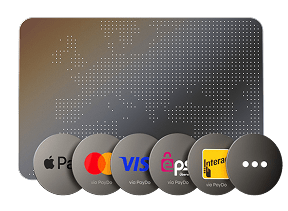
PayDo supports various payment methods and international coverage. We work with Visa/Mastercard, Apple Pay, Interac, Pix, and Fawry.
Want to try it for size? Reach out and let’s talk.
The 30-Second Summary The fastest way for a digital goods platform to pay sellers in Europe and the UK is an instant transfer: SEPA Instant for euros and Faster Payments...
The 30-Second Summary Low transaction fees look like the obvious way to compare payment providers. Skin store owners start with the rate on the price sheet because it is the...
The 30-Second Summary A payment gateway for a game key store has one job: get buyers’ card payments approved and keep the account open as volume grows. For game key...
The 30-Second Summary SEPA Instant sends euros within the SEPA area in up to 10 seconds, 24/7. SWIFT works in almost any currency, but a transfer usually takes 1–2 business...
The 30-Second Summary In the fast-paced and ever-changing iGaming industry, what are the current best online casino payment methods? Today, we are taking a snapshot for 2025, when the iGaming...
The 30-Second Summary A Money Services Business (MSB) is a type of financial institution that offers various money-related services, such as money transfers, currency exchange, and check cashing. It is...
The 30-Second Summary Electronic Money Institutions (EMIs) and Money Services Businesses (MSBs) are becoming more and more popular. EMIs focus on digital transactions, providing electronic payment services and digital currency...
The 30-Second Summary Phishing remains a major cybersecurity threat, targeting individuals and businesses through fraudulent emails, messages, and websites. According to the Anti-Phishing Working Group (APWG), 3.8 million phishing attacks...
The 30-Second Summary As digital payments continue to grow, payment fraud remains a significant concern. According to Alloy’s 2026 State of Fraud Report, 67% of surveyed financial institutions and fintechs...
The 30-Second Summary A bank account ownership certificate, also known as a bank account certificate or proof of account ownership, is a document that says your bank account actually belongs...
The 30-Second Summary A Company Registration Number (CRN) is a code a business gets during incorporation. It acts as a distinct identifier for your company. It helps to differentiate your...
The 30-Second Summary Imagine each bank branch with its unique postal code — that’s what a branch code or sort code is in the financial world. It’s a set of...