Using multiple payment gateways reduces failed transactions, lets customers pay their preferred way and opens up more markets.
The trade-off is technical complexity and more security work for every extra integration.
Payment orchestration platforms, plugins and direct API integrations let even non-technical teams manage several gateways from one place.
Every business uses at least one payment gateway, but do you need to go through the trouble of multiple payment gateway integration? The short answer is: yes. Integrating different payment gateways into one system is always going to be trickier than just using the same solution, but it is the only way to reach peak accommodation for different groups of customers.
What Does “Multiple Payment Gateways” Really Mean?
A payment gateway is a service that processes transactions between a business and its customers – think PayPal, Amazon Pay, Shopify. Defining it as a “service” is crucial to understanding its nature, especially when comparing payment methods vs payment gateways vs payment processors, because certain companies can provide all three.
Aspect
Payment Methods
Payment Gateways
Payment Processors
Definition
The ways customers choose to pay.
The technology that securely captures and transmits payment data.
The service that communicates between banks, card networks, and merchants.
Function
Provides payment options like cards, wallets, or transfers.
Encrypts and authorizes payment details during checkout.
Approves transactions and transfers funds between accounts.
Key Role
Defines what customers use to pay.
Defines how payment information is collected.
Defines who moves the money securely.
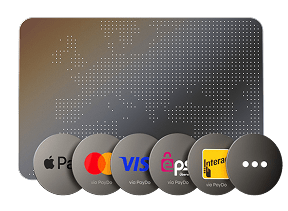
When a company decides to integrate multiple payment gateways, it gains access to multiple payment methods, additional geographic coverage, and an alternative route if one provider fails. This setup is often used by businesses with international reach or high transaction volume.
Why Businesses Choose Multiple Payment Options
The benefits of having multiple payment options boil down to having more features to offer and more systems to rely on in case something goes wrong. Let’s see how that works in more detail.
Reducing Failed Transactions
If your business is using just one payment gateway, the success of your transactions hinges on that one gateway working perfectly at all times. Offering multiple payment methods creates a backup option for transaction processing and makes your business more immune to downtime or technical issues.
Improving Customer Experience
Customers appreciate being able to pay with their preferred options, and do not appreciate the website malfunctioning – it can be as simple as that. The previous benefit of multiple payment methods directly feeds into this point. When customers find their preferred payment method, they are more likely to complete their purchase and return for future transactions, and you will also not cause your client base additional frustration when the only payment gateway you are using is out of commission.
Catering to More Markets
Supporting various payment methods is crucial to cater to a global audience. Customers from different regions have different payment preferences. For example, while credit cards are popular in the US, digital wallets like Alipay and WeChat Pay are prevalent in China. Businesses can attract and retain customers worldwide by offering multiple payment options, improving overall accessibility and convenience.
Multiple Payment Gateways vs Single Provider
The benefits of multiple payment options will be easier to grasp after looking at this juxtaposition:
Feature
Multiple Payment Gateways
Single Provider
Reliability
High – redundancy during outages
Moderate – risk if provider goes down
Cost Management
Potentially lower via rate comparison
Fixed rates, less flexibility
Integration Complexity
High – requires managing several APIs
Low – one system to implement
Global Reach
Better – supports various regions and currencies
Limited to provider’s coverage
Reporting
Complex – multiple dashboards
Simplified – centralized data
Best For
Scaling, international businesses
Startups, small businesses
Common Challenges of Multi-Gateway Integration
If you are planning to integrate multiple payment gateways, you should be aware of potential challenges on your way.
Technical Complexity
Multiple payment gateway integration involves complex technical work. The bits of code, API integrations, and the degree of compatibility with existing system will all vary for different payment gateways. Each option will have its own requirements and protocols, and there might be challenges with synchronizing data across different gateways. Utilize middleware solutions or payment orchestration platforms that simplify API integrations and manage multiple gateways through a single interface. We will come back to this in the next section.
Compliance & Security
Compliance with international regulations and standards, such as PCI DSS, is the backbone of using secure multiple payment gateways. Businesses must stay updated with regulatory changes and work closely with their payment providers to maintain compliance. PayDo, for instance, ensures PCI DSS Level 1 compliance, helping businesses manage regulatory requirements efficiently.
Implement a centralized compliance management system that tracks and ensures compliance across all payment gateways. Regularly audit your payment processes and collaborate with your gateway providers to stay ahead of regulatory changes.
How to Integrate Multiple Payment Gateways?
Independently connecting every single gateway into your system can be tedious. Here are some ways to kill several birds with one stone in the world of multiple payment gateway integration.
Direct API Integrations
Different APIs for each gateway are a lot to manage – choose a unified API to connect multiple payment gateways through a single interface and save yourself a lot of time. You should be able to quickly adapt to new payment technologies and methods without extensive rework. PayDo’s unified API is an example of solid all-in-one integration, providing access to multiple payment options and gateways with minimal coding required.
Using Payment Orchestration Platforms
A payment orchestration platform is a sophisticated piece of software that gathers multiple payment gateways in one place through a single integration point and helps the user to manage all payment operations from one place.
Plug-ins and Extensions
Utilizing plug-ins and extensions for e-commerce platforms can also double as a method of easy integration of multiple payment gateways. These plug-ins are designed to work out-of-the-box, so there will be no need to customize them. At PayDo we offer a range of plug-ins that integrate with all of the popular e-commerce platforms, bringing you diverse payment options with minimal setup time.
TSPs
Tech service providers, or TSPs, are another great option that will save you some time: reaching out to these companies is like calling a handyman to perform a task in your house. You will have to pay more than in the other options, but your business will get additional support and expertise in addition to the integration. TSPs often have pre-existing relationships with providers of multiple payment options and can offer highly tailored solutions that meet specific business needs – that is why we love to collaborate with many TSPs at a time at PayDo.
Multiple Payment Gateways vs Multiple Payment Methods
Multiple payment methods can be easier to integrate and will still offer your clients the benefits of multiple payment options. However, these two services also correspond to two different goals for the company: where multiple payment gateways ensure that transactions come through despite maintenances or outages, multiple payment methods refer to just offering your clients more opportunities to pay, with no immunity to disruptions.
Feature
Multiple Payment Gateways
Multiple Payment Methods
Definition
Use of several third-party processors (e.g., Stripe, PayPal)
Offering various ways to pay (e.g., card, wallet, bank)
Purpose
Increase reliability, optimize fees, and expand globally
Improve user experience and payment flexibility
Integration Effort
Higher – multiple APIs, technical management
Moderate – often supported by a single gateway
Redundancy
High – fallback during outages or issues
Low – tied to gateway availability
User Benefit
Transactions come through even if one provider fails
More choice at checkout (card, wallet, etc.)
Business Advantage
Cost control, broader market reach
Better conversion rates, customer satisfaction
Best For
Global, high-volume businesses
All businesses aiming to serve diverse customer needs
Security Measures in Multi-Gateway Environments
Standard security protocols help protect payment transactions and customer details across different gateways. The exact choice depends on your goals and your clients’ preference in how to use multiple payment gateways.
3D Secure (3DS). 3D Secure (3DS) is a security protocol that adds layer of authentication for online card transactions. It reduces the risk of fraud by requiring cardholders to authenticate themselves with their issuing bank. 3DS can significantly enhance transaction security, reducing the likelihood of chargebacks and fraudulent activities.
Encryption and Fraud Prevention. Encryption is vital for protecting sensitive data during transmission. By encrypting transaction data, businesses can prevent unauthorized access and data breaches. Additionally, fraud prevention measures (real-time monitoring, ML algorithms, and multi-factor authentication) help to catch fraudulent activities early on.
Tokenization. Tokenization replaces sensitive payment information with a unique identifier or token, which is useless if breached. This reduces the risk of sensitive data being compromised during a transaction. Implementing tokenization can enhance security and compliance with data protection regulations.
Multiple Payment Gateways and Cross-Border Commerce
Global commerce depends on flexibility in payments, so knowing how to use multiple payment methods online goes a long way in expanding your business. A customer in Germany may expect SEPA transfers. One in Brazil may prefer Boleto. Supporting multiple gateways allows businesses to accept local payment types and currencies, among other benefits of offering multiple payment options. It also helps meet regulatory requirements that differ by region. This flexibility makes cross-border transactions more practical and less prone to failure.
How PayDo simplifies payment processing
Now that you know how to use multiple payment gateways, you can choose with whom to partner to do so. PayDo offers tools that reduce the burden of managing multiple gateways. PayDo offers API integrations, e-commerce plug-ins, and dedicated Key Account Managers for business clients. As a principal member of Visa and Mastercard with PCI-DSS Level 1 certification, PayDo enables international payment processing without unnecessary intermediaries. For businesses seeking scale or global coverage, PayDo presents a practical solution with fewer complications.
FAQ
1. Can I manage multiple gateways without a development team?
Yes. Management of multiple gateways does not have to be a tech-heavy process, and it is possible for non-technical teams to do so with the help of plug-ins and orchestration tools. Still, while you may not need full-time developers, occasional expert input helps avoid costly errors.
2. Will multiple gateways affect checkout speed?
Not if configured properly. Most systems handle routing in the background, so customers won’t notice a difference. In fact, smart routing can improve speed by selecting the fastest available provider. A well-integrated setup keeps the experience smooth and responsive, even during high traffic or partial outages.
3. Are there added costs?
Some additional costs may apply, including setup or transaction fees. However, the ability to compare rates across gateways often leads to better pricing over time. By shifting volume strategically, businesses can reduce overall costs. The savings can outweigh initial expenses, particularly in high-volume or international contexts.
4. Is it safe to use more than one processor?
Yes, provided each provider meets accepted security standards. Multi-gateway setups can even improve reliability and reduce risk. Encryption, tokenization, and compliance with PCI DSS remain essential, no matter how many processors you use. As long as these measures are in place, security remains intact.
5. What is one payment gateway fails?
The benefit of using multiple payment gateways lies in the fact that you will have back-up options. If one gateway fails, it will be possible to complete the transaction with another.
The 30-Second Summary The fastest way for a digital goods platform to pay sellers in Europe and the UK is an instant transfer: SEPA Instant for euros and Faster Payments...
The 30-Second Summary Low transaction fees look like the obvious way to compare payment providers. Skin store owners start with the rate on the price sheet because it is the...
The 30-Second Summary A payment gateway for a game key store has one job: get buyers’ card payments approved and keep the account open as volume grows. For game key...
The 30-Second Summary SEPA Instant sends euros within the SEPA area in up to 10 seconds, 24/7. SWIFT works in almost any currency, but a transfer usually takes 1–2 business...
The 30-Second Summary In the fast-paced and ever-changing iGaming industry, what are the current best online casino payment methods? Today, we are taking a snapshot for 2025, when the iGaming...
The 30-Second Summary A Money Services Business (MSB) is a type of financial institution that offers various money-related services, such as money transfers, currency exchange, and check cashing. It is...
The 30-Second Summary Electronic Money Institutions (EMIs) and Money Services Businesses (MSBs) are becoming more and more popular. EMIs focus on digital transactions, providing electronic payment services and digital currency...
The 30-Second Summary Phishing remains a major cybersecurity threat, targeting individuals and businesses through fraudulent emails, messages, and websites. According to the Anti-Phishing Working Group (APWG), 3.8 million phishing attacks...
The 30-Second Summary As digital payments continue to grow, payment fraud remains a significant concern. According to Alloy’s 2026 State of Fraud Report, 67% of surveyed financial institutions and fintechs...
The 30-Second Summary A bank account ownership certificate, also known as a bank account certificate or proof of account ownership, is a document that says your bank account actually belongs...
The 30-Second Summary A Company Registration Number (CRN) is a code a business gets during incorporation. It acts as a distinct identifier for your company. It helps to differentiate your...
The 30-Second Summary Imagine each bank branch with its unique postal code — that’s what a branch code or sort code is in the financial world. It’s a set of...