The 30-Second Summary
- An IT company that invoices clients and pays contractors across Europe, the UK and the US usually needs three rails: SEPA for euros, SWIFT for other currencies and countries, and a local rail for GBP or USD.
- Several schemes changed in 2025. SWIFT completed its switch to ISO 20022 on 22 November 2025, Fedwire moved to ISO 20022 on 14 July 2025, and SEPA Instant dropped its €100,000 per-transaction cap on 5 October 2025.
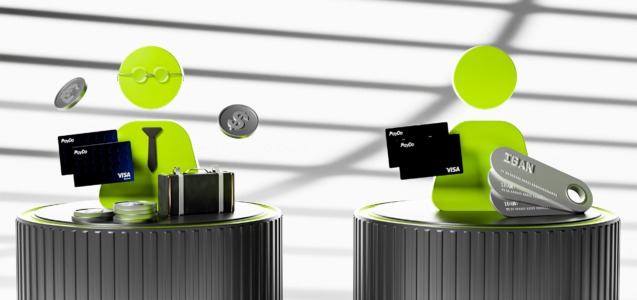
- A PayDo business account sends and receives SEPA, SEPA Instant and SWIFT payments from one IBAN in your company’s name. Opening it takes 3–5 business days.
A payment scheme is the set of rules and infrastructure that moves money between bank accounts: who can join, which currency it carries, how fast it settles and how much one payment can be. For an IT company, the scheme decides how quickly a client’s invoice lands and how much a contractor loses on the way.
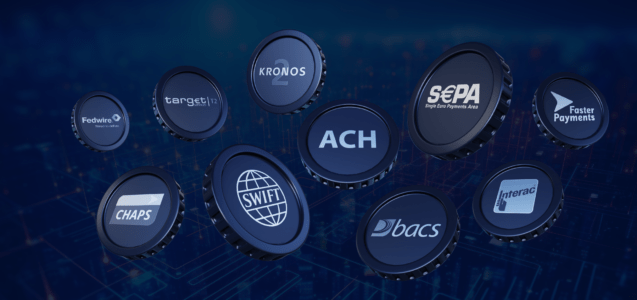
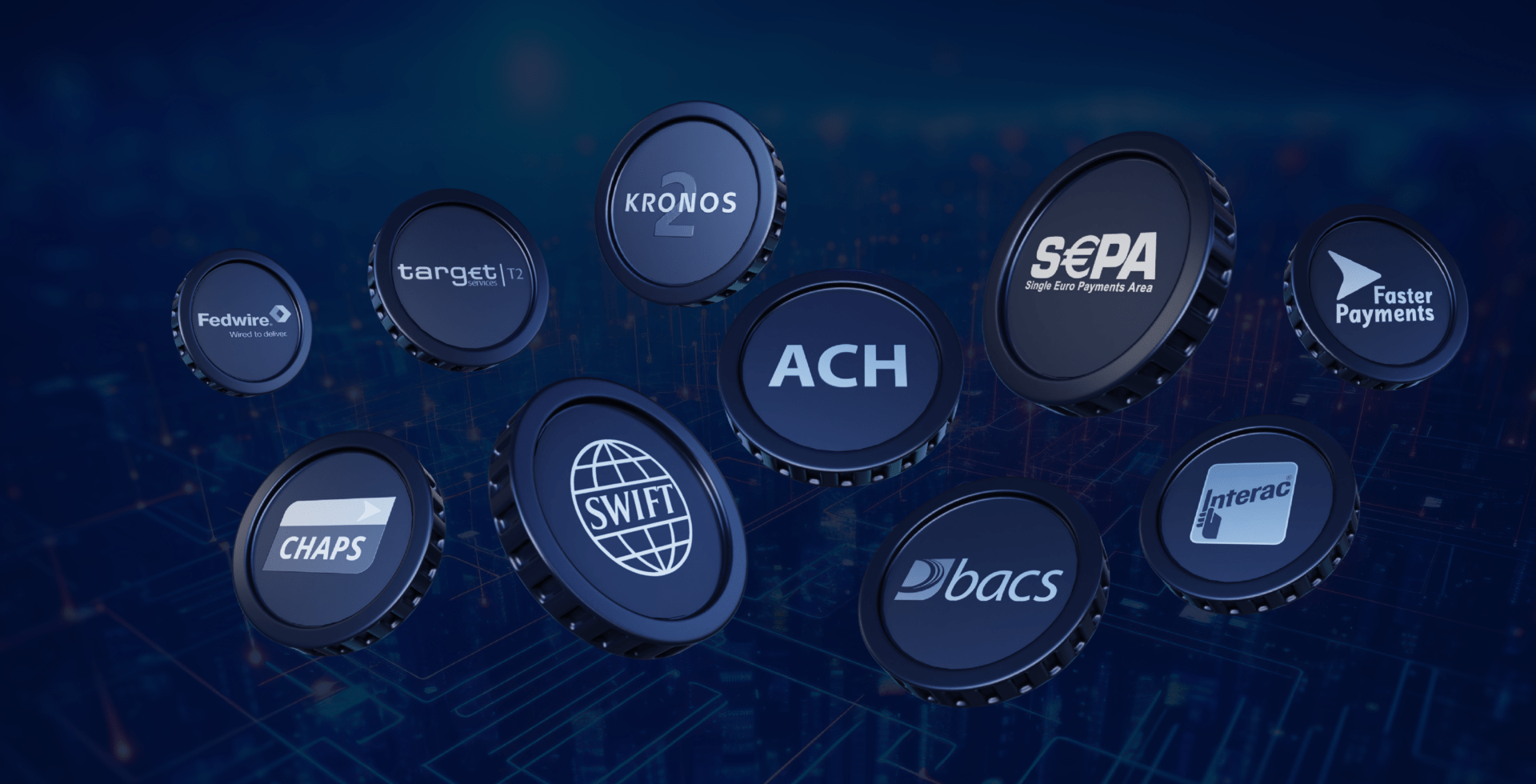
The 10 schemes at a glance
| Scheme | Currency | Where | Speed | Limit per payment |
|---|---|---|---|---|
| SWIFT | Any | 200+ countries | Same day to a few business days | Set by banks |
| SEPA Credit Transfer | EUR | SEPA countries | Up to 1 business day | Set by banks |
| SEPA Instant | EUR | SEPA countries | Up to 10 seconds, 24/7 | No scheme cap since October 2025 |
| T2 | EUR, DKK | Euro area and Denmark | Real time, business days | Large-value, bank-to-bank |
| Faster Payments | GBP | UK | Seconds, 24/7 | £1 million |
| CHAPS | GBP | UK | Same working day | No limit |
| Bacs | GBP | UK | 3 working days | Set by banks |
| Fedwire | USD | US | Real time, business days | Large-value |
| ACH | USD | US | Same day or 1–2 business days | $1 million for Same Day ACH |
| Interac e-Transfer | CAD | Canada | Minutes | Set by banks |
1. SWIFT
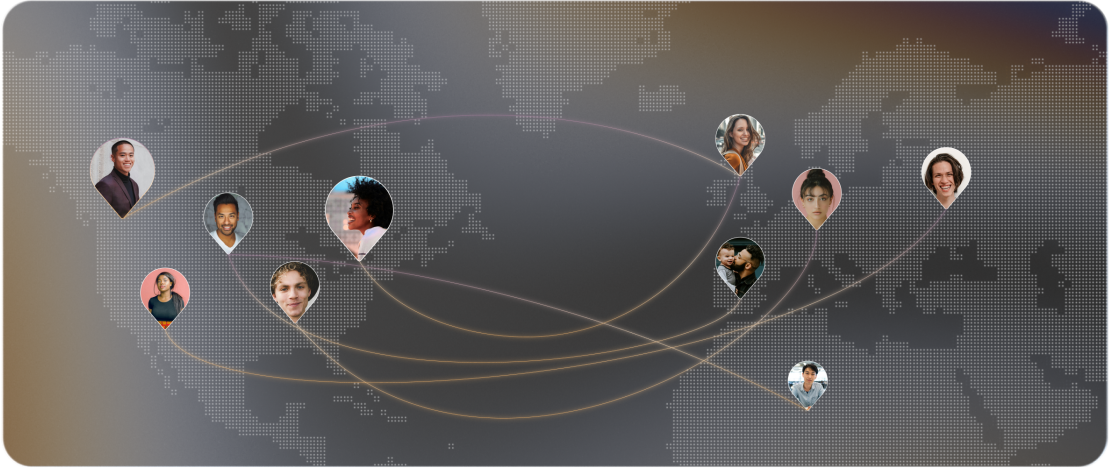
SWIFT is the messaging network banks use to send international payments in almost any currency. It connects more than 11,500 banks, securities firms, market infrastructures and corporates in over 200 countries and territories. A SWIFT payment can pass through one or more correspondent banks, and each can take a fee.
What changed. The coexistence period between the old MT format and ISO 20022 for cross-border payments ended on 22 November 2025, and ISO 20022 is now required for all payment instructions. Payments carry structured data, such as full addresses and invoice references, which helps cut rejections and manual repairs.
When an IT company needs it. Paying contractors outside the SEPA area, receiving USD from US clients, or sending any currency SEPA doesn’t cover.
2. SEPA Credit Transfer
SEPA Credit Transfer moves euros between accounts in SEPA countries at the cost of a domestic transfer, usually within one business day.
What changed. Since 9 October 2025, payment providers in the euro area must check that the payee’s name matches the account number before a transfer is made. A wrong name now triggers a warning before the money leaves.
When an IT company needs it. Invoicing EU clients and paying EU contractors in euros. If a client’s bank refuses your IBAN because of its country code, read how to fix IBAN discrimination.
3. SEPA Instant
SEPA Instant moves euros in up to 10 seconds, 24/7, including weekends and holidays.
What changed. Under the EU instant payment rules, from 9 January 2025 euro-area payment providers can’t charge more for instant payments than for regular transfers, and from 9 October 2025 they must let clients send instant euro payments. The €100,000 limit per SEPA Instant transfer was removed on 5 October 2025.
When an IT company needs it. Paying contractors on the day an invoice is approved, or moving funds on a Friday evening without waiting for Monday.
4. T2
T2 is the Eurosystem’s system for large euro payments between banks, settled one by one in central bank money. It was previously called TARGET2. Businesses don’t send payments through T2 themselves; their bank does it for large or urgent euro transfers.
What changed. Since 22 April 2025, payments in Danish krone also settle in T2 and TIPS, which replaced Denmark’s own Kronos2 system.
When an IT company needs it. Rarely directly. It matters when your bank routes a large urgent euro payment.
5. Faster Payments
Faster Payments is the UK’s instant payment scheme for pounds. It settles in seconds and runs 24/7.
Limits. The scheme limit is £1 million per transaction, raised from £250,000 in February 2022, and individual banks can set lower limits depending on the account and payment method.
When an IT company needs it. Paying UK contractors and suppliers in GBP and receiving payments from UK clients.
6. CHAPS
CHAPS is the Bank of England’s same-day scheme for large sterling payments. It has no minimum or maximum transaction amount, although banks may impose their own limits.
When an IT company needs it. Sterling payments above the Faster Payments limit, or payments that must be final on the same working day.
7. Bacs
Bacs is the UK scheme behind Direct Debits and bulk Direct Credits such as payroll. It runs on a fixed three-day cycle: the request is submitted on day one, processed on day two and credited on day three.
When an IT company needs it. UK payroll and recurring collections from UK clients by Direct Debit.
8. Fedwire
Fedwire is the Federal Reserve’s system for large US dollar transfers, settled one by one in real time. It settles more than $4.7 trillion in wire transfers on an average day.
What changed. Fedwire switched to ISO 20022 messages on 14 July 2025, and processing speed stayed the same.
When an IT company needs it. Receiving large USD payments from US clients into a US account.
9. ACH
ACH is the US network for batch payments: payroll, supplier payments and direct debits. Standard ACH takes one to two business days; Same Day ACH settles within the day.
Limits. The Same Day ACH limit has been $1 million per payment since 18 March 2022 and will rise to $10 million on 17 September 2027. In the first quarter of 2026, Same Day ACH carried 403 million payments worth $1.1 trillion.
When an IT company needs it. Getting paid by US clients who pay by ACH, and paying US contractors who expect a domestic transfer.
10. Interac e-Transfer
Interac e-Transfer is Canada’s most used fast payment service. The sender needs only the recipient’s email or phone number. It typically caps transfers at $3,000 for consumers and $25,000 for businesses.
What changed. Canada is launching a new instant rail. The Real-Time Rail rules came into force on 24 August 2026, with the system scheduled to launch in the fourth quarter. Interac e-Transfer clearing will move onto it in 2027.
When an IT company needs it. Paying Canadian freelancers in CAD for small amounts. Larger CAD payments usually go by SWIFT or domestic wire.
How to choose the payment schemes your IT company needs
- Map where the money comes from. List your clients by country and currency. EU clients pay by SEPA, US clients by ACH, Fedwire or SWIFT, UK clients by Faster Payments.
- Map where it goes. List contractors by country. Outside the SEPA area and the UK, SWIFT is usually the only option.
- Check amounts and speed. Instant rails have caps: £1 million on Faster Payments, $1 million on Same Day ACH. Above that, use CHAPS or Fedwire.
- Count currency conversions. Every conversion costs you. A multi-currency account lets you hold EUR, GBP and USD and pay in the currency you received.
- Check whose name is on the IBAN. Some banks reject payments to pooled accounts or certain IBAN country codes. An IBAN in your company’s name avoids most of these rejections.
Why PayDo fits IT companies
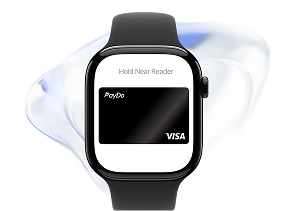
PayDo gives IT companies one account for client payments, contractor payouts and team cards.
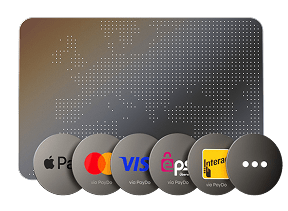
- SEPA, SEPA Instant and SWIFT from one account, for euro and international payments.
- Dedicated IBAN issued in your company’s name.
- Contractor payouts to Europe and to Ukraine, Kazakhstan and Armenia.
- Multi-currency balance, so you pay in the currency you received instead of converting twice.
- Account opening in 3–5 business days, with one dedicated account manager from the first call.
PayDo is authorised by the FCA in the UK and the MFSA in Malta and registered with FINTRAC in Canada. It keeps client funds at tier-1 European banks, separate from its own, and has operated for over 8 years. To open an account, start on the PayDo Business Account page.
FAQ
Which payment schemes does PayDo support?
A PayDo business account sends and receives payments by SEPA, SEPA Instant and SWIFT from a dedicated IBAN in your company’s name.
What is the difference between SWIFT and SEPA?
SEPA moves only euros, only between SEPA countries, at the cost of a domestic transfer. SWIFT works in almost any currency and country but can pass through correspondent banks that add fees and time. See SEPA Instant vs SWIFT.
Is there a limit on SEPA Instant payments?
Not at scheme level. The €100,000 cap per transfer was removed on 5 October 2025. Banks and payment providers can still set their own limits.
Is Kronos2 still in use?
No. Denmark moved krone payments from Kronos2 to the Eurosystem’s T2 and TIPS in April 2025.
How do I pay a contractor in the US from Europe?
Send a USD SWIFT transfer to the contractor’s US bank account. Domestic US rails such as ACH and Fedwire are available only between US accounts.