A digital wallet is software that stores your payment details and uses them to pay online and in stores, protected by payment tokenization.
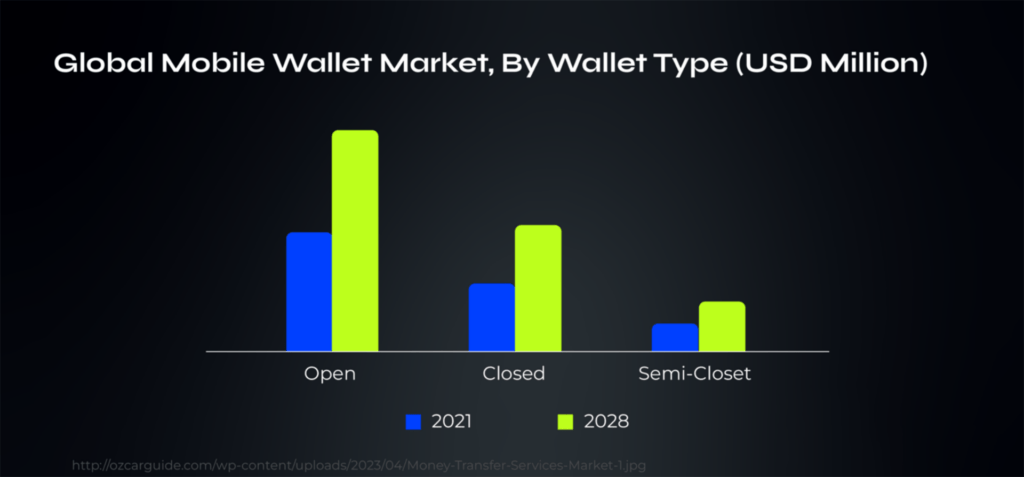
Wallets come in three types: closed (one company), semi-closed (partner brands) and open (anywhere cards are accepted).
The main benefits are convenience, security, speed and easy use abroad.
What is a digital wallet? It is likely you have already used one, even if you did not necessarily recognize it. Digital wallet technology makes it possible to do purchases and transactions online. Everything that people used do in real life with their credit cards and cash – store it, pay for things, lend it – becomes digital because of e-wallets. Let’s talk about them in more detail.
What Is a Digital Wallet?
From a technical standpoint, a digital wallet is a piece of software (sometimes packaged into an app) that stores a user’s payment information and allows this user to participate in the full scope of financial operations online. We will take a closer look at the inner workings of this software, but to fully grasp the digital wallet definition, it is important to distinguish what it is not:
A bank app. An online banking solution is more complex and provides a broader scope of financial management – paying bills, depositing checks remotely, applying for loans etc. Functions of a digital wallet will differ. While many banks integrate digital wallets into their systems, there is a clear hierarchy where a bank app or webpage reflects a large institution with all of its legal powers, while a digital wallet is just that – a convenient tool to pay for stuff.
PayPass/PayWave. PayPass and PayWave are neither apps nor software solutions; they are technologies built into smartphones to make payments possible. While PayPass belongs to Mastercard and PayWave to Visa, their mechanism and relationship with e-wallets are the same: the technology takes the money out of the digital wallet and reacts to the card-reading device to initiate the transaction. Think of the transaction as an act of walking from one room to another – the first room is the digital wallet, the walker is the money, and PayPass or PayWave is the door.
How Does a Digital Wallet Work?
Learning the digital wallet definition is just the start. To fully answer “how does an e-wallet work”, we need to know what occurs behind the scenes of lightning-fast transactions and how the safety of these operations comes into play.
How Payments Are Processed
The digital wallet saves payment details, and uses them to complete a transaction. Once the user is ready to pay, the payment processing goes like this:
Digital wallet verifies the user’s identity using a PIN, password, fingerprint, or facial recognition.
After tapping the phone, scanning a QR code, or clicking a pay button online, the actual payment process begins.
The wallet sends encrypted payment information to the merchant using NFC, QR, or a secure gateway.
The acquiring bank and card network receive the data and approve the transaction.
The wallet confirms the payment instantly and updates the balance or transaction history.
How Security Is Maintained
The primary way of securing the user’s funds during transactions is payment tokenization, but what is e-wallet actually doing for that to happen? During a transaction, a bank, a payment provider, or an app changes the card number into a unique string of characters, called a token, that is useless to hackers in case of an interception. Every time, the generated token is different. This process is optional for credit cards, but happens automatically for all digital wallets.
Types of Digital Wallets
Digital wallets can fall into various groups and sub-categories depending on how they function.
Closed Wallets
Closed wallets are the most exclusive and the least flexible. They usually exist inside of a large retailer’s ecosystem, and allow purchases from this retailer only. The biggest example of a closed wallet is Amazon Pay, but any company can set up a closed wallet on a smaller scale.
How to use a digital wallet that is closed? It has to be consistently topped-up from external sources, but taking the money back out is usually a much harder process. For the parenting company, this drives extra profits by incentivizing users to spend more within the same ecosystem. The companies may offer unique discounts and deals to the wallet owners, but aside from that opening a closed type of digital wallet makes more sense for the users that are already loyal to the issuing brand.
Semi-Closed Wallets
Rather than limit their users to one company’s infrastructure, semi-closed wallets broaden the horizon to include purchases from partnering brands. “Semi-closed” is a spectrum: depending on the number of partnerships and the breadth of adoption, a particular kind of wallet can appear almost closed with extra deals, or be so widespread you would not notice its “closedness”. Case in point: Google Pay and Apple Pay are both semi-closed wallets, but they are so popular, and so often both integrate with the same websites and payment terminals in real life, that it is easy to forget about them stemming from different operating systems.
Open Wallets
Open wallets grant the broadest spectrum of services. Asking yourself “what is an e-wallet”, the most intuitive response will likely describe a wallet that is open. In addition to making all kinds of purchases possible, they allow users to withdraw cash and transfer funds to other accounts. They also support the most payment methods, including credit and debit. PayPal is the most popular open digital wallet in the world, and the second most popular digital wallet in the rankings that include the semi-open Apple Pay.
Crypto Wallets vs Digital Wallets
Cryptocurrency wallets operate in ways different from digital wallets, even though certain features of digital wallet are often adapted for crypto. Unlike traditional digital wallets, which rely on centralized providers like banks or payment companies, crypto wallets operate on decentralized blockchain networks. Crypto wallets also provide private keys, which users must secure to access their digital assets. While digital wallets are more mainstream and regulated, crypto wallets grant their users more anonymity and are mostly used for investment, trading, or decentralized finance (DeFi) applications.
Benefits of Using a Digital Wallet
Digital wallets are a logical next step in the overall digital financial evolution, and are already becoming the new norm. According to Absrbd, global digital wallet transactions are expected to rise by 60% by 2026. The world is gradually becoming paperless and credit cards are getting less popular as younger generations understand the real e-wallet meaning: convenience, security, speed, and global access.
Convenience
Today few people leave their house without a smartphone. For users of digital wallets, this means:
As long as their phones are with them – so is their money. Two items – wallet and phone – become one.
No risk of human error – no more washing a couple bills in the washing machine on accident or a card falling out of pocket.
The user experience is intuitive and fast – selecting the right card to swipe takes more time than a few taps on the screen.
Budgeting becomes easier – while some people report using cash to set hard limits on their spending, checking the balance online is way faster than counting paper bills.
Security
Cash money has no regulations or protective measures around it, aside from the word of the law. It is easier to steal, harder to prove ownership of, and near impossible to track, both for the owner and for the government officials in case something goes wrong. It is safer to use a credit card, but those can still get stolen and the PIN codes’ four digits make for a deeply imperfect, vulnerable password. When it comes to security, digital wallets are on a whole different level. Detailed timestamps for every transaction maximize transparency, while mandatory regulations minimize fraud.
Speed of Transactions
The speed advantage of all things digital over using cash are clear, but how does an e-wallet work to be faster than a card? The user-friendly design of most digital wallets prioritizes speed. Manually entering the card number and the PIN is a tedious and annoying process, made fully unnecessary by the digital wallets’ interfaces. While many users understand the digital wallet meaning, they may underestimate the meaning of one-tap payments and the world of difference they create when you need to complete a transaction as fast as possible.
International Use
Digital wallets were the world’s fastest-growing and dominant payment method in 2023. While their international adoption is still second to credit cards, the ways they automate the currency exchange and allow users to shop from any country online, make it much easier to participate in the global economy.
Digital Wallet vs Traditional Payment Methods
While digital wallets are gaining more and more traction, using a traditional payment method like a credit card still has its merits. Here’s how unique features of an e-wallet differ from using a traditional credit card.
Feature
Digital Wallet
Credit Card
Can function offline/without network connection
No
Yes
Can function when the user’s phone is dead
No
Yes
Resistant to wear and tear
Partially*
As long as the device is operational, so is the digital wallet. If the device is broken, the access to digital wallet will be temporarily lost.
No
24/7 visibility of cardholder’s current balance
Yes
No
Enhanced security measures
Yes
No
Are Digital Wallets Safe to Use?
Digital wallets always use ID verification and monitor transactions for suspicious activity. New rules and regulations also constantly emerge as a response to more sophisticated cyber threats. Between the ever-modernizing regulatory compliance and mandatory payment tokenization, digital wallets make for an extremely safe payment method.
How to Choose the Right Digital Wallet
You learned how to use digital wallet, now learn how to choose one. Here’s what to consider when choosing the right digital wallet for you:
Security features and encryption protocols. When choosing a digital wallet, prioritize security. Providers use two-factor authentication, one-time PINs, and encryption to protect user information. Digital wallets can be password protected, and your card number is tokenized, so merchants only receive limited information.Take extra precautions like using strong passwords and monitoring your accounts.
Compatibility and regional availability. Some digital wallets may not be compatible with all devices or available in all regions. Google Wallet, for instance, is available in many countries and regions, but some features are only available on certain devices and in certain countries.
Fees and service agreement requirements. E-wallets may charge fees for every process step, including deposits, withdrawals, and conversion rates. In most cases, withdrawal fees can vary from 0% to 8%, depending on the withdrawal method and the agreements between the e-wallet and the payment provider.
Integration capabilities. Look for digital wallets with available third-party apps and services. If you use a digital wallet that connects to your bank account, you can easily move funds between accounts. Similarly, if your e-wallet links with your favourite shopping app, you can buy from the app.
Customer support options. Look for support channels like live chat, email, or phone. Read user feedback to assess the provider’s commitment to customer satisfaction, from answering the basic questions like “how to use my digital wallet” to more sophisticated niche inquiries. Do they actually answer everything? Are certain questions too easy to bother or left up to the community to resolve?
If you do not yet own an e-wallet, after fully grasping the digital wallet meaning it might be high time to consider getting one. While cash and cards have their time and place in our modern financial ecosystem, there are very few reasons to deny yourself the convenience of single-tap payments and security of tokenization. Digital wallets save time, wallet space, and the conversion rate headaches, and this technology only promises to get bigger and better. Today, instead of asking yourself “do I need a digital wallet”, the more proactive approach is to ask: “why not”.
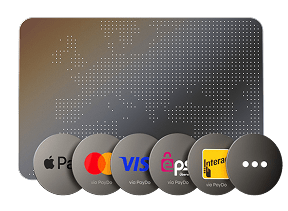
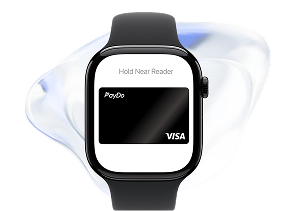
PayDo fully integrates with both Apple Pay and Google Pay,and PayDo provides secure payment infrastructure for various industries under appropriate regulatory standards.
Reach out to usand let’s see what desired features of digital wallet we can offer you.
The 30-Second Summary In the fast-paced and ever-changing iGaming industry, what are the current best online casino payment methods? Today, we are taking a snapshot for 2025, when the iGaming...
A Money Services Business (MSB) is a type of financial institution that offers various money-related services, such as money transfers, currency exchange, and check cashing. It is something similar to...
Electronic Money Institutions (EMIs) and Money Services Businesses (MSBs) are becoming more and more popular. EMIs focus on digital transactions, providing electronic payment services and digital currency storage. According to...
Phishing remains a major cybersecurity threat, targeting individuals and businesses through fraudulent emails, messages, and websites. According to the Anti-Phishing Working Group (APWG), 3.8 million phishing attacks were recorded in...
As digital payments continue to grow, payment fraud remains a significant concern. According to Alloy’s 2026 State of Fraud Report, 67% of surveyed financial institutions and fintechs reported an increase...
A bank account ownership certificate, also known as a bank account certificate or proof of account ownership, is a document that says your bank account actually belongs to you. It...
A Company Registration Number (CRN) is a code a business gets during incorporation. It acts as a distinct identifier for your company. It helps to differentiate your company from others...
The 30-Second Summary Imagine each bank branch with its unique postal code — that’s what a branch code or sort code is in the financial world. It’s a set of...
The 30-Second Summary When you think of it, digital finance is truly all about an exchange of codes – money hidden in chains of letters and numbers, but how to...
The 30-Second Summary IBANs (International Bank Account Numbers) are the standards for internal money transfers in many countries, including the entirety of the EU, but Canada relies on a different...
When sending or expecting money from abroad to a UK bank account, just giving the regular account number won’t do. You’ll usually need to provide more details, like an IBAN...
The 30-Second Summary According to Forrester, US retail sales are projected to grow from $5.2 trillion in 2025 to $6.2 trillion by 2030. Globally, Research and Markets forecasts the retail...