The 30-Second Summary
- A SWIFT code, also called a BIC, identifies a specific bank in international transfers and has 8 or 11 characters.
- You can find it on a bank statement, in online banking, on the bank’s website, with a SWIFT search tool or by calling support.
- SWIFT transfers usually take one to four business days; weekends and holidays don’t count.
When you think of it, digital finance is truly all about an exchange of codes – money hidden in chains of letters and numbers, but how to find SWIFT code among them? Finding your way between all of the different abbreviations and encryptions can be confusing. Today we will teach you a new word in this financial language and ensure you know how to find SWIFT code on your digital banking services.
What Is a SWIFT Code?
A SWIFT code is a chain of symbols, both numbers and letters, that identifies a certain bank. What does a SWIFT code look like? There are between 8 and 11 characters, depending on whether the code describes the headquarters of the bank or a specific branch (the longer the code – the more specific the information). If we visualize all financial transactions as circulation of mail, a SWIFT or BIC code will be the bank’s digital address. It is unique and highly specific, ensuring the money goes to the right place.
SWIFT vs BIC — Are They the Same?
So, is there a difference between SWIFT and BIC code? The short answer is no, you will find SWIFT code and BIC is the same thing. Both codes identify the recipient bank for international payments. They are both regulated by the ISO 9362 standard. The only difference is in the terminology itself: BIC stands for Bank Identifier Code, so this abbreviation actually refers to the code itself, and SWIFT stands for Society for Worldwide Interbank Financial Telecommunication, identifying the code by the network that sends the codes. SWIFT is the organization in charge of registering BIC codes.
Structure of a SWIFT Code
SWIFT or BIC code consists of 8 or 11 characters. Here’s how to read a SWIFT code:
- the first 4 characters indentify the bank code
- the next 2 characters are the country code
- following are the two characters that identify the location
- the optional last 3 characters are the branch code.
You’ll usually see the 8-character codes on general documents and the 11-character codes when there is need to mention a specific branch for something like a wire transfer.
SWIFT codes for all banks, financial, and non-financial institutions receive recognition and approval from the International Organization for Standardization (ISO). Presently, there are thousands of live SWIFT codes operational worldwide.
Why Do You Need a SWIFT Code
SWIFT/BIC codes are fairly easily accessible and there are many ways to discover them. Here’s how to find SWIFT code in different places.
On your bank statement
Check your bank statement or online banking. How to find BIC/SWIFT code inside it? It may be printed on your statement or displayed on your account details, near the account number or in the top right corner of the statement.
Via online banking or app
An online banking website or app will have your SWIFT code in your account requisites, next to your IBAN code, or in the international transfers section. Apps and online bankings with an AI assistant can also guide you in real time if you ask them to “find my BIC code”.
On the bank’s official website
Banks often feature their SWIFT code on their website, usually in the international payments or profile information section. Look through their Frequently Asked Questions section next; “how do I find swift code for my bank account” could be featured there with the answer.
Using SWIFT code search tools
There are many tools that will access the database of different banks and find SWIFT code for you. To check SWIFT code online, they will usually require this information:
- The country of the bank
- The name of the bank
- The exact format of SWIFT/BIC code
By calling customer support
If you ran into trouble finding SWIFT code with any of the abovementioned methods, asking the bank’s support team is a good last resort. If the experience of looking for a SWIFT code has proven confusing, your feedback on it could potentially be helpful in improving their user interface for the future.
Is It Safe to Share Your SWIFT Code?
SWIFT codes are public information, so they are pretty safe to share. They identify only the bank, not the end user, so hackers and other ill-willing parties cannot use them against end users. Anybody can see a bank’s SWIFT code on their website, or find it using the SWIFT code search tools we mentioned before.
How Long Does It Take to Transfer Money with a SWIFT Code?
Despite its name, you may find SWIFT code is not the swiftest of payment methods. Transfers may take anywhere between one and four business days to process, since the exact duration depends on many factors.
- Weekends and holidays do not count as business days. This means that for a SWIFT transfer sent late in the day on a Friday, the countdown will start no earlier than Monday, and it can arrive on a Thursday or possibly even next Friday if the time zones are different – basically next week. This is a maximum estimate, but still, if you wish to get the fastest processing times with SWIFT code, search for opportunities to send money early in the week and take holidays into consideration for time-sensitive transfers.
- Different banks have different processing times. For example, banks that are part of the Faster Payments system can offer same-day transfers. Atom Bank in the UK and Chase Bank in the United States are both known for fast processing times, and digital-native banks like Monobank or Ally also tend to be near-instant because of their tech-forwardness.
- How complex or niche is your transfer? The more widespread the currency and the less intermediary banks are involved, the faster the transfer will clear. Unfortunately this is also true for security – more fraud checks and a variety of sophisticated anti-laundering schemes will add to the safety of the transfer, but they will also add to the to the processing time.
Do All Banks Have SWIFT Codes?
While for large international banks it is the norm to have a BIC/SWIFT, you may struggle to find SWIFT code assigned to a small or regional bank. It is necessary them to use an intermediary bank to be able to send or receive a SWIFT transfer; a factor that can extend the payment processing period.
Can You Send Money Without a SWIFT Code?
Domestically – yes, but international transfers will be limited to very few options. All traditional banks across the globe require a SWIFT code as the main identifier in cross-border transactions. For EU members that want to send money within the European Economic Area (EEA), just having an IBAN may suffice. Some other combinations of sender/receiver countries can also allow just using IBAN, but SWIFT is still the usual go-to code for sending money abroad. If you have neither IBAN nor SWIFT, your options will be limited to using digital wallets that support alternative payment methods, or conducting transfers within the SEPA zone.
Conclusion
SWIFT code is a must-have participant of most international transfers, so understanding how it works is the entryway into using it correctly. The knowledge of what determines the processing times and how to find BIC/SWIFT code if it is not immediately obvious is something that should inform the financial operations of everyone involved in international transfers.
At PayDo, we offer a dedicated IBAN for your international payments. With our multi-currency support and direct payment rails, we simplify global transactions for businesses and individuals.
Contact our team to explore the opportunities of a PayDo Business Account.
FAQ
What does a SWIFT code look like?
A SWIFT code looks like a sequence of numbers and letters that is 8-11 characters long. It is usually arranged like this: AAAA BBB CC 123.
- AAAA: The first four letters represent the bank.
- BB: The next two letters indicate the country where the bank is located.
- CC: The third part is a 2-character location code (letters or numbers) for the bank’s main office.
- 123 (optional): The final three characters specify a particular branch. If these are ‘XXX’, the transfer goes to the bank’s head office.
What happens if I enter the wrong SWIFT code?
Entering the wrong SWIFT code may result in your money being sent to the wrong bank or the transfer being rejected. In either case, processing delays are likely. Always double-check the SWIFT code with the recipient or through official sources before confirming the transaction.
Where can I find BIC code of my bank?
Here’s how to find SWIFT code (BIC):
- Check your bank statement’s top right corner
- Go to your account details on your banking app
- Consult the bank’s official website
- Use an online search tool
SWIFT codes are publicly available information so they are usually fairly easy to locate. If all else fails, reach out to customer support. Your bank also may be too small to have their own SWIFT code – in this case you will need to extend your SWIFT code search to the intermediary bank that they are using.
Is a SWIFT code the same as an IBAN?
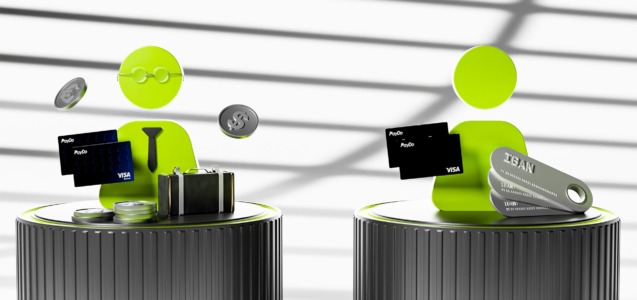
No, a SWIFT code and an IBAN serve different purposes. The SWIFT code identifies the recipient’s bank, while the IBAN identifies the individual bank account. Both are often required for international transfers to ensure the money reaches the right bank and specific account securely.
How to find SWIFT/BIC code using a search tool?
With the help of specifically designated online tools, finding SWIFT code becomes easy. Go on you search engine of choice, type in something along the lines of “find my bic code”, and select one of the free tools accessible. The search tool will ask to input a country, a format of the code (8 or 11 symbols depending on whether you need a specific branch), and the name of the bank. After that, the website will process your request and provide you with the SWIFT code instantly.
Can I use the same SWIFT code for different types of transactions?
Sure, SWIFT transfers can be used for a diverse spectrum of services. Anything from personal transfers to business payments or investments is fine. The only distinction is if a transaction involves a specific branch, you may need the full 11-character code instead of the general 8-character version.