A multi-currency account lets you hold, send and receive several currencies in one account instead of opening separate accounts or cards for each.
It collects payments in the sender’s currency and stores them unchanged until you decide to convert.
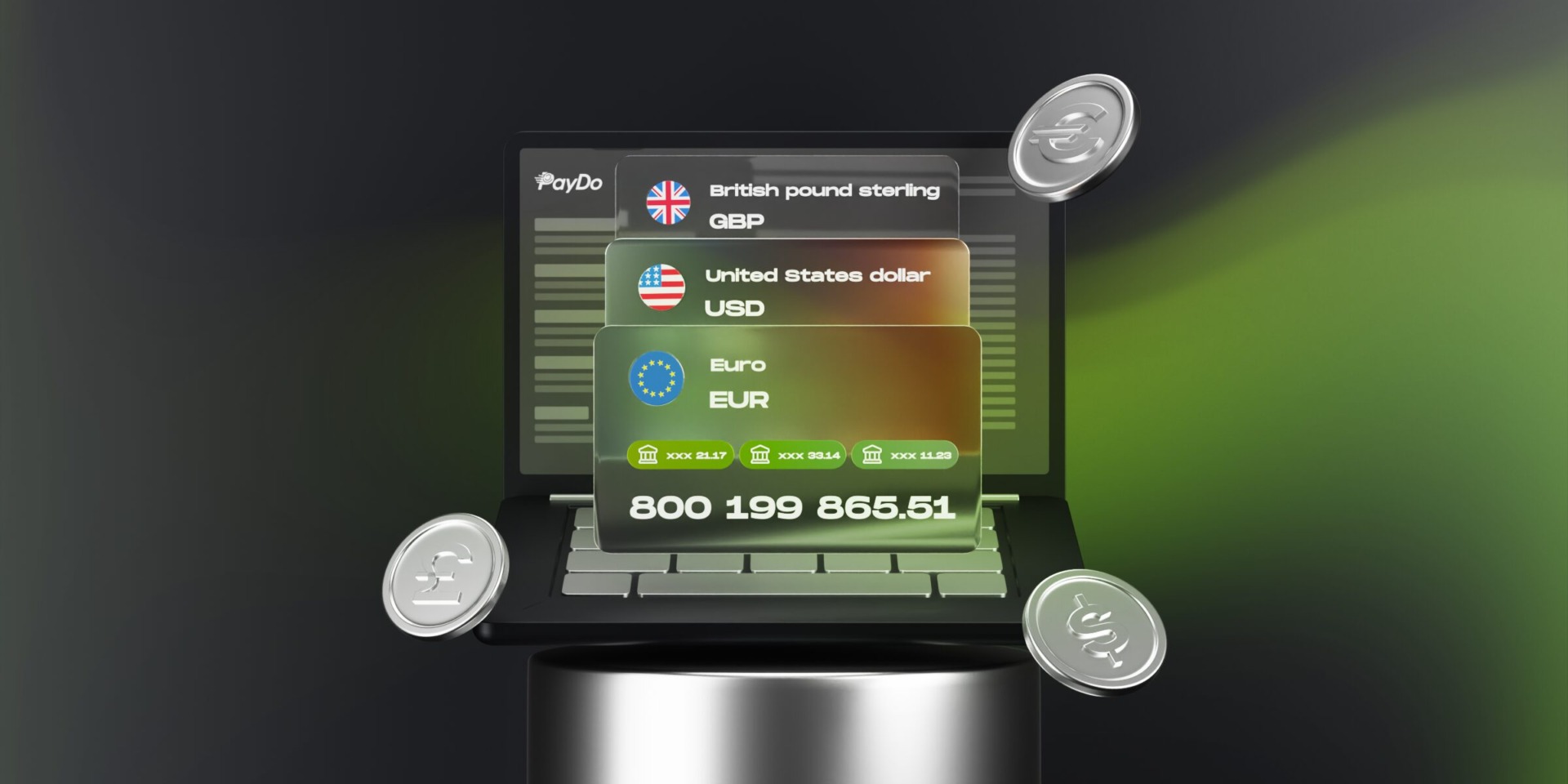
Check conversion and transfer fees before choosing; PayDo offers multi-currency dedicated IBANs that make international transfers easier to track.
Many people who work, travel, or trade across borders ask what is multi-currency account support and how it helps simplify international payments. As cross-border activity grows, managing several currencies in one place has become an everyday need. A multi-currency account offers a practical way to organise these funds with less cost and more clarity.
What Is a Multi-Currency Account
Despite modern day online business banking being all about convenience, it is not uncommon to need separate cards and/or separate bank accounts for different currencies. Converting these currencies and sending them from one account to the other is a bit of a headache and can take time and money in conversion fees, creating a flawed user experience, especially when you need to do a purchase quickly.
So, what is multi-currency account’s role in all of this? It is the answer to described problem. A multi-currency account is a financial arrangement that allows individuals and companies to hold, receive, and send more than one currency through a single profile. It brings all balances together in a clear structure, which reduces repeated conversions. This simple arrangement forms the multi-currency account definition used by many modern providers.
The Core Idea in Simple Words
So what is the purpose of multi-currency account, explained simply? The idea behind a multi-currency account is easy to picture – it simplifies having multiple currencies inside of the same bank account in the following ways:
The account contains separate balances for each currency, much like small containers placed inside a single box.
Users can view, add, or move funds whenever they choose.
This direct structure expresses the multi-currency account meaning in plain terms without added complexity.
How It Is Different from a Traditional Bank Account
Most traditional bank accounts operate in only one currency. They often convert foreign payments automatically, which increases cost and reduces control. A multi-currency bank account allows a person or business to hold several currencies within one system, and this opens the door for many other multi-currency services. For example, PayDo offers multi-currency dedicated IBANs, which make international transfers more direct and easier to track.
How Does a Multi-Currency Account Work
People who ask how does multi-currency account work usually want to know how funds move inside the account. Each currency is placed in a separate balance and only converted when the user requests it. Transfers arrive more quickly because they follow modern payment routes, which many companies rely on as part of their online payment solutions.
Currency Storage and Switching
Okay, but what is multi-currency account doing in the background, when the transfers are not actively happening? Each currency remains in its own balance until the user acts. Conversion happens at the moment chosen by the account holder. This arrangement reduces unexpected charges and provides control over timing. Transparent pricing and user control are among PayDo’s priorities.
Payment and Receipt in Multiple Currencies
A multi-currency account can collect payments in the currency that matches the sender’s region and store the amount without changes. When you need to send money in multiple currencies, the account draws from the matching balance. This model explains how does multi-currency account work in everyday use. It also supports people who trade abroad, travel often, or manage several income sources.
Differences Between Personal and Business Multi-Currency Accounts
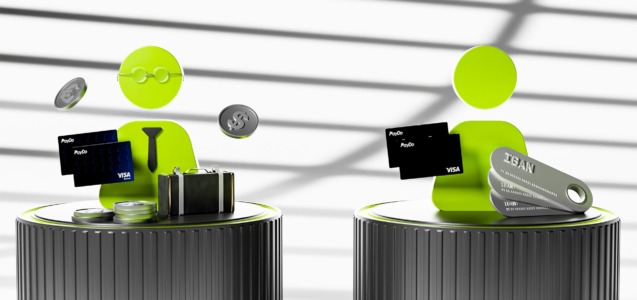
Personal accounts help individuals who receive foreign wages or travel widely. Business accounts meet higher demands, such as access for several employees, more detailed records, and larger transfer limits. They also depend on dedicated IBANs, which PayDo provides to support structured activity and clear reconciliation for a business account in multiple currencies.
Aspect
Personal Multi-Currency Account
Business Multi-Currency Account
Primary Use
Designed for individuals who receive foreign income, travel often, or manage payments in several currencies.
Intended for companies that operate across regions and require structured support for international transactions.
Features
Simple balances, straightforward transfers, and basic tools for everyday use.
Higher limits, multi-user access, detailed records, and support for accounting or operational tasks.
Dedicated IBANs
Often includes dedicated IBANs for personal incoming payments in several currencies.
Provides multi-currency dedicated IBANs suited for organised settlements, supplier payments, and invoicing.
Management Needs
Focuses on convenience and clear access from anywhere.
Focuses on efficiency, compliance, and organised financial oversight.
What Are the Main Benefits for Individuals and Businesses
Having a multi-currency account provides several practical advantages for people who work or travel internationally and for companies that manage payments across regions.
Key benefits for individuals include:
The ability to hold several currencies without repeated conversion.
Clear records of foreign income and spending.
Fewer charges when using funds abroad.
Faster access to payments from overseas clients or employers.
Key benefits for businesses include:
A structured way to receive payments from different markets.
The option to maintain balances in several currencies for operational needs.
Easier management of supplier payments without forced conversions.
The ability to orchestrate mass payouts in different currencies for suppliers and employees from different countries.
Who Should Consider Opening a Multi-Currency Account
Many people and organisations work across borders and need a practical way to manage payments. Those who may find a multi-currency account useful include:
Freelancers and contractors who are paid by clients in different countries.
Travellers, expatriates, and remote workers who spend or earn money abroad.
Online merchants who accept payments from various markets.
Importers, exporters, and agencies that maintain supplier networks in several regions.
Companies that require a stable structure for international transfers, including access to dedicated IBANs for each currency.
Which Is the Best Multi-Currency Bank Account Today
The best option varies based on daily use and the currencies involved. Traditional banks are often limited in dealing with multi-currency, meaning slower transfers. Providers like PayDo offer wider currency support, full global coverage, and multi-currency dedicated IBANs that simplify sending and receiving funds. This helps both individuals and businesses maintain accurate, organised financial records.
Hidden Fees You Might Miss When Using Multi-Currency Accounts
Some providers include conversion charges that are not immediately clear or apply fees to certain withdrawal methods. Others add costs for specific incoming transfers. Reading the full fee schedule before opening a multi-currency account account prevents confusion. PayDo aims to keep charges transparent so users understand their costs from the start.
How to Open a Multi-Currency Account Online
It is usually simple to open multi-currency account online. Providers collect basic information, then request identification to satisfy legal requirements. Businesses may need additional documents that show ownership or registration. Once the account is approved, the user can add or remove currency balances and proceed with international transactions whenever needed.
Is It Safe to Store Money in Multi-Currency Accounts
Safety depends on the provider’s regulation and internal controls. Reputable institutions keep client funds separate from their own, follow strict security measures, and monitor transactions for unusual activity. PayDo keeps client funds separate in tier-1 European banks and provides secure access to each user’s multi-currency account.
Do Multi-Currency Accounts Replace the Need for FX Services
Multi-currency accounts reduce the need for third-party exchange, but they do not remove it completely. Users still convert funds when necessary. The benefit is that they can decide when to convert, which brings greater control. This is especially useful for businesses that operate across several markets.
How to Choose the Right Multi-Currency Account Provider
A suitable provider offers the currencies you use most, reliable transfer networks, and clear pricing. It should also provide tools appropriate for your situation, such as organised statements or multi-user access. Pay special attention to the pricing plans and see who offers you the features you are most likely to use – as a private individual, there is no point in paying extra for an advanced solution when you need the bare minimum. That being said, for businesses the situation is a bit different – the perspective of growth should always be a factor, so go for providers that prioritize scalability.
Why PayDo Is a Smart Choice for Multi-Currency Accounts
PayDo’s multi-currency account goes all in on the “multi-currency” definition:
We support more than 60 currencies worldwide, more than 170 countries, and more than 350 alternative payment methods.
In addition to a multi-currency dedicated IBAN, your account will get access to our Checkout services, Mass Payouts, and Virtual/Physical cards. All of our solutions are included in one contract.
You can use SEPA, SEPA Instant, SWIFT, and Faster Payments to accelerate your international transfers to the max.
Our new Team Members feature allows business owners to delegate the management of their business bank accounts and merchant accounts to their teams, with customizable access.
A dedicated account manager specializing in your industry will guide you through the onboarding process.
Reach out to us with any questions about your potential multi-currency journey and together we will work out how PayDo can empower you and your business to manage finances anytime, anywhere.
FAQ
What is the basic idea behind a multi-currency account?
A multi-currency account stores several currencies in one place and keeps them separate until the user decides to convert or transfer them. It offers a simple structure for cross-border payments, clearer records for international activity, and a more deliberate approach to managing currency changes.
How do I know if I need one?
You may need one if you work with clients in different regions, travel often, or operate a company that trades across borders. These accounts help reduce conversion charges, shorten transfer times, and provide organised records for international payments.
What documents are required?
Providers usually ask for identification and proof of address for private users. Businesses often need formation documents and ownership records. These requirements help confirm identity and maintain compliance with financial regulations. The process is typically straightforward and completed through a secure online platform.
Does a multi-currency account cost more than a regular account?
Costs vary by provider. Some accounts charge for certain transactions, while others maintain lower fees. The main value lies in reducing unnecessary currency conversions. Reviewing the full fee schedule in advance helps avoid surprises and ensures the account suits your financial routine.
What are alternatives to multi-currency accounts?
Some people use regular bank accounts with added foreign features or rely on specialised currency brokers. These options may suit narrow needs, although they lack the unified structure found in a multi-currency account, which provides more order for routine international payments.
Do multi-currency accounts come with dedicated IBANs?
Many financial providers now offer dedicated IBANs for each supported currency. PayDo uses this model to improve accuracy and speed when receiving international transfers. Dedicated IBANs help keep payments organised, reduce confusion over routing, and give users a clear system for managing several currencies at once.
The 30-Second Summary The fastest way for a digital goods platform to pay sellers in Europe and the UK is an instant transfer: SEPA Instant for euros and Faster Payments...
The 30-Second Summary Low transaction fees look like the obvious way to compare payment providers. Skin store owners start with the rate on the price sheet because it is the...
The 30-Second Summary A payment gateway for a game key store has one job: get buyers’ card payments approved and keep the account open as volume grows. For game key...
The 30-Second Summary SEPA Instant sends euros within the SEPA area in up to 10 seconds, 24/7. SWIFT works in almost any currency, but a transfer usually takes 1–2 business...
The 30-Second Summary In the fast-paced and ever-changing iGaming industry, what are the current best online casino payment methods? Today, we are taking a snapshot for 2025, when the iGaming...
The 30-Second Summary A Money Services Business (MSB) is a type of financial institution that offers various money-related services, such as money transfers, currency exchange, and check cashing. It is...
The 30-Second Summary Electronic Money Institutions (EMIs) and Money Services Businesses (MSBs) are becoming more and more popular. EMIs focus on digital transactions, providing electronic payment services and digital currency...
The 30-Second Summary Phishing remains a major cybersecurity threat, targeting individuals and businesses through fraudulent emails, messages, and websites. According to the Anti-Phishing Working Group (APWG), 3.8 million phishing attacks...
The 30-Second Summary As digital payments continue to grow, payment fraud remains a significant concern. According to Alloy’s 2026 State of Fraud Report, 67% of surveyed financial institutions and fintechs...
The 30-Second Summary A bank account ownership certificate, also known as a bank account certificate or proof of account ownership, is a document that says your bank account actually belongs...
The 30-Second Summary A Company Registration Number (CRN) is a code a business gets during incorporation. It acts as a distinct identifier for your company. It helps to differentiate your...
The 30-Second Summary Imagine each bank branch with its unique postal code — that’s what a branch code or sort code is in the financial world. It’s a set of...