Almost 47% of workers worldwide are freelancers (World Bank), and they can get paid by bank transfer, online payment platforms, cards or e-wallets.
When choosing a method, compare fees, ease of use, speed, security, international reach and exchange rates.
To get paid on time, manage invoices, track payments, set automatic reminders and use retainer agreements for ongoing work.
Can you guess how many freelancers are out there? Well, according to World Bank data, almost 47%of workers worldwide are freelancers. And if you are reading this article, chances are you are a part of this statistic.
Freelancing offers opportunities to generate both passive and active income streams. However, accepting payments as a self-employed specialist can be a hassle.
You might encounter excessive fees or have to manage unreliable clients. There’s also a possibility of not receiving your payment if your client’s preferred payment method is not supported. To avoid this, we have created this short guide to help you choose an optimal payment method to facilitate the freelancing payment process.
Understanding different payment methods for freelancers
There are multiple payment methods freelancers can choose from. Let’s explore some of the most popular and widespread payment options you can choose from and see what are the pros and cons of each of them.
Direct bank transfers
Bank transfers involve the transfer of funds from the client’s bank account to the freelancer’s account. This method is straightforward and typically incurs low or no fees. However, it requires sharing bank details, and processing times can be slower, especially for international transactions.
For freelancers working with international clients, it’s important to consider the specific details of international bank transfers. This may involve additional information such as Cross-border (Society for Worldwide Interbank Financial Telecommunication) codes.
Exchange rates are also a consideration for international transfers, and freelancers should be aware of any currency conversion fees that may apply.
Freelancers should exercise caution and ensure that their banking details are shared securely. It’s advisable to use secure communication channels and to avoid sharing sensitive information through unsecured means.
Pros
Cons
Direct and straightforward.
Requires sharing bank details.
Generally low or no fees.
Slower processing times, especially for international transfers.
Can be used for global transactions.
Less convenient than using other, more automated payment methods.
Online payment platforms
Digital payment platforms are widely trusted globally. Users connect their bank accounts or credit cards to these platforms, enabling fast and extensive transactions. However, despite their convenience, these platforms may impose transaction fees and temporarily hold funds for security purposes.
For example, freelancers now face a 2.9% charge on each payment, along with an extra fixed fee of $0.03 on a leading online payment platform. Additionally, freelancers stand to lose a further 5% of their income when converting currency.
Pros
Cons
Widely used and accepted.
Transaction fees.
Faster transactions.
Some platforms may hold funds temporarily for security reasons.
Automated invoicing and record-keeping.
Some platforms may be susceptible to cybersecurity threats.
Credit/Debit card payments
Card payments have been the “go-to” option for many years, but bank payments can prove a better option for many freelancers. Even though, realistically, there are only two options when it comes to payment methods (card payments or bank payments), freelancers can choose between many providers.
However, freelancers need to be aware of transaction fees associated with card payments, impacting overall earnings. Occasionally, clients may dispute a charge, leading to a process called chargebacks. Handling these situations promptly is important for maintaining a positive professional relationship.
Security is crucial, and using platforms compliant with standards like PCI DSS ensures the safety of financial information. Some platforms offer additional security features, such as two-factor authentication.
Pros
Cons
Convenient for clients.
Transaction fees.
Quick transactions.
Potential chargebacks, which can be a risk for freelancers.
Global accessibility.
Some platforms may require additional account verification steps.
E-wallets
E-wallets are digital wallets that enable users to store funds and conduct electronic transactions. Users can load money into their e-wallets from bank accounts or credit cards.
E-wallets can be used for various financial transactions, including online purchases, bill payments, and, importantly for freelancers, sending and receiving payments.
A recent research conducted by Juniper Research indicates that the global number of digital wallet users is projected to surpass 5.2 billion by 2026, showing a robust growth of over 53%. from 3.4 billion in 2022.
They are particularly advantageous for those with international clients and are often integrated into various freelancing platforms.
Some e-wallets are linked to bank accounts or cards, providing quick and easy payment options. While they offer additional features, freelancers should be mindful of transaction fees, and these platforms may not be universally accepted.
Pros
Cons
Quick and easy transactions.
Transaction fees, especially for instant transfers.
Some offer additional features like budgeting tools.
May not be as widely accepted as traditional methods.
User-friendly interfaces.
Some platforms may require additional account verification steps.
Cryptocurrency
In recent years, there has been a significant surge in the adoption of cryptocurrencies within the freelance industry. A study conducted by Triple-A among 11 major freelance markets revealed that 61% of freelancers currently own cryptocurrency, and 56% of them have embraced cryptocurrency payments for their services.
Cryptocurrencies can facilitate faster and more cost-effective international transactions compared to traditional banking systems. This can be especially beneficial for freelancers working with clients globally.
Additionally, some freelancers see cryptocurrency payments as an investment opportunity. If the value of the cryptocurrency they receive appreciates, they may benefit from holding onto it.
Freelancers may appreciate the lower transaction fees and the borderless nature of cryptocurrencies. However, the volatility in their value and limited acceptance by clients, along with a learning curve for both parties, are important considerations.
Pros
Cons
Lower transaction fees compared to some traditional methods.
Volatility in value.
Decentralization.
Learning curve for both freelancers and clients.
Borderless transactions.
Regulatory uncertainty.
Overall, freelancers have a range of payment methods to consider, each with its own set of pros and cons. Direct bank transfers offer simplicity but involve sharing bank details and may have slower processing times. Online payment platforms are widely used but may have transaction fees and security concerns. Credit/debit card payments are convenient but come with potential chargebacks and transaction fees. E-wallets provide quick transactions but may have fees and limited acceptance.
Cryptocurrency adoption is growing, offering fast international transactions, but the value volatility and limited client acceptance pose challenges. Hence, when it comes to making a choice, freelancers should select payment methods aligning with their needs and client preferences.
Factors to consider when selecting payment method
As you can see, there are multiple payment options available for freelancers globally. However, not all of them can be a perfect fit in your particular case. So, what factors should you take into consideration when choosing a payment method? Let’s see.
Transaction fees
Compare the transaction fees associated with each payment method. Some methods may charge a flat fee per transaction, while others may have a percentage-based fee. Additionally, consider any hidden fees or charges, such as withdrawal fees or currency conversion fees.
Understanding the fee structure is essential to accurately assess how these fees can impact your overall income, especially if you engage in numerous transactions.
Ease of use
A seamless and intuitive process can enhance the overall experience, reducing the likelihood of errors or delays. Consider factors such as the simplicity of account setup, the clarity of the user interface, and the accessibility of customer support.
An easy-to-use payment method not only streamlines your financial transactions but also contributes to positive client relationships.
Speed of payment
Assess the time it takes for funds to be available in your account after a transaction. Some payment methods offer near-instantaneous transfers, while others may involve longer processing times. For freelancers with regular cash flow needs, quicker payment processing can be advantageous, ensuring timely access to funds for personal and business expenses.
Security
Prioritize the security of financial transactions. Ensure that the chosen payment method employs effective data protection measures to secure sensitive information, such as encryption protocols and two-factor authentication.
Understanding the level of security provided can reduce the risk of fraud or unauthorized access, instilling confidence in both you and your clients.
International accessibility
If you work with global clients, consider the international accessibility of the payment method. Some methods may have restrictions or additional hurdles for cross-border transactions, such as limitations on certain countries or prolonged processing times.
Choosing a payment method that facilitates smooth international transactions is crucial for freelancers engaging in a global marketplace.
Currency exchange rates
For freelancers receiving payments in different currencies, understand how currency exchange rates can impact your income. Some payment methods offer competitive and transparent exchange rates, while others may impose less favourable terms. Consider the overall cost of currency conversion and choose a method that provides clear information on exchange rates to minimize any potential financial impact on your earnings.
Overall, the best payment method for you will depend on a number of factors. Evaluating transaction fees, prioritizing ease of use, ensuring timely payments, emphasizing security measures, assessing international accessibility, and understanding currency exchange rates are all crucial aspects.
By considering these factors, freelancers can make informed decisions that not only optimize their financial transactions but also contribute to positive client relationships and overall business success.
Tips to manage your payments efficiently
Effective payment management is a crucial aspect of freelancing that contributes to a sustainable and successful freelance career. Here are some tips for various aspects of payment handling:
Invoice management
Ensure your invoices are clear, detailed, and include all necessary information:
your name or business name,
contact information,
invoice number,
date,
a breakdown of services,
rates,
the total amount due.
Clearly communicate your payment terms to clients. Specify due dates, late fees (if applicable), and the preferred payment method. Include these details in your contract or agreement to avoid any misunderstandings.
Payments tracking
Establish a systematic approach to track your payments. This could involve using spreadsheets, accounting software, or dedicated payment tracking tools.
Regularly update your records to reflect the status of each invoice. Clearly mark when payments are due, paid, or overdue.
Managing cash flow
Clearly define payment terms in your contracts and invoices. This includes specifying due dates, late fees, and any other relevant details.
Offer incentives for early payments or implement late fees for overdue payments to encourage clients to adhere to the agreed-upon timelines.
Diversify payment methods
Provide clients with various payment methods to accommodate their preferences. This can include bank transfers, credit/debit cards, online platforms, and, if applicable, cryptocurrency.
Diversifying payment options for freelancers is about meeting the diverse needs and preferences of clients. It can enhance the freelancer’s ability to attract and retain clients, improve cash flow, and provide a seamless and convenient experience for all parties involved in the payment process.
Communicate effectively
Clearly communicate your payment expectations with clients upfront. Discuss payment terms before starting a project to avoid misunderstandings later on.
If a payment is delayed, send polite but firm follow-up messages. Maintain a professional tone while emphasizing the importance of timely payments.
Set up automatic reminders
Utilise calendar reminders or invoicing tools to automatically remind clients of upcoming payment deadlines. This can help streamline the follow-up process.
You can use project management apps like Trello or Asana to set up automatic reminders for payment due dates.
Utilise retainer agreements
For ongoing projects, consider using retainer agreements. This ensures a steady income stream as clients pay a predetermined amount upfront.
Implement a retainer system where clients pay a fixed monthly fee for ongoing services.
Stay informed about tax deductions
Familiarize yourself with tax deductions applicable to freelancers in your jurisdiction. This can help maximize your take-home income and reduce your overall tax liability. Keep track of business-related expenses such as office supplies, software subscriptions, and professional development courses for potential tax deductions.
By implementing these tips, freelancers can establish efficient payment management practices, ensuring a steady and reliable income stream while fostering positive client relationships.
Get paid as a freelancer with PayDo
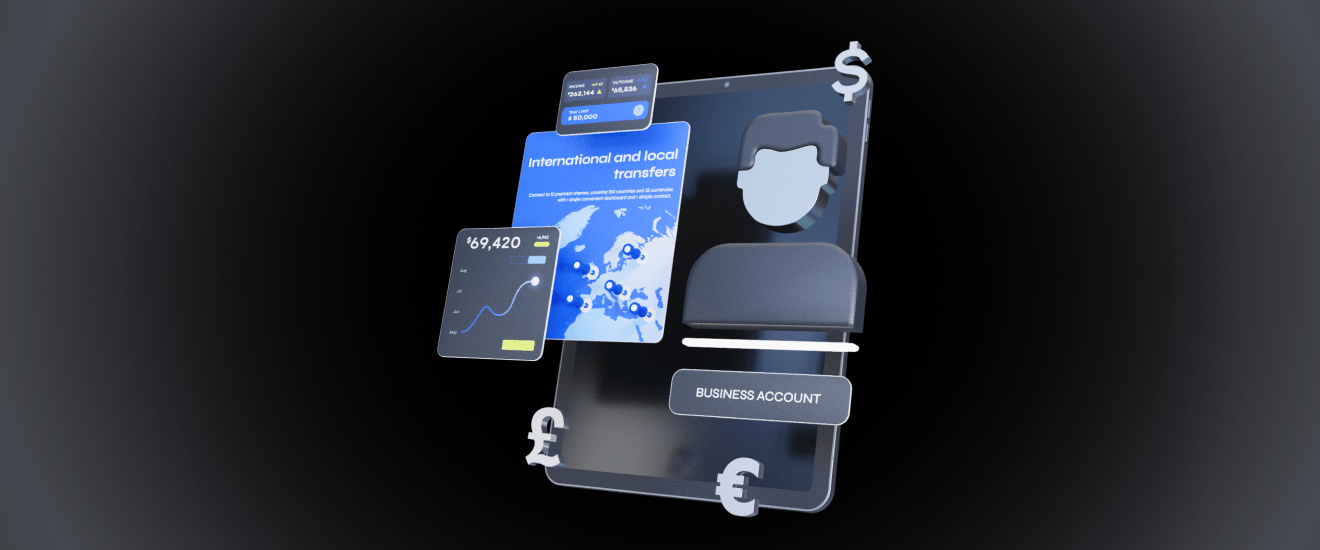
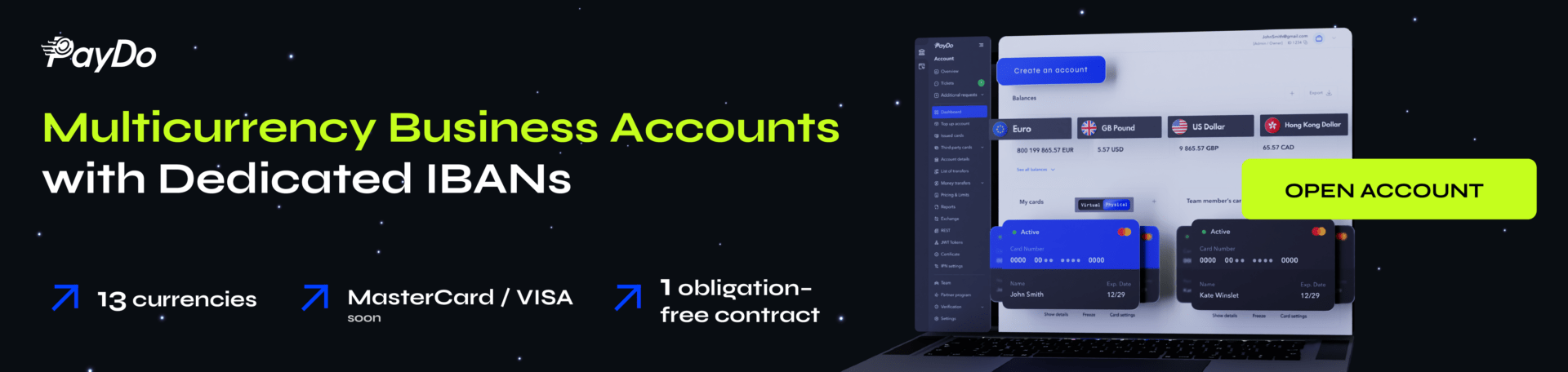
Opening a business account can be daunting for freelancers, especially those with a global presence. However, there are solutions available to address these challenges effectively. PayDo offers unique services and technology that simplifies receiving cross-border and local payments.
Depending on your business needs and goals, you can open a personal or business PayDo account.
PayDo Business Account offers the following opportunities for freelancers:
Open multicurrency IBANs for incoming and outgoing money transfers.
Send and receive bank transfers in 35+ currencies locally and internationally, using multiple payment networks.
Bank like a local in the US, EU, UK, DK, Canada, Switzerland, and Germany.
Card issuance: physical and virtual cards in EUR.
The ability to add debit cards from other issuing banks to account.
Multiple top-up options: with cards, alternative payment schemes, and issued account details.
Money withdrawal to cards, bank transfers.
Money transfers to other PayDo users.
Creating and downloading payment reports.
With PayDo, there is no need to limit yourself to one payment method. You have the option to receive payments through various online methods such as Visa, Mastercard, Google Pay, Apple Pay, Cross-border transfers, and others.
All you have to do is complete a quick and easy verification, and you are ready to go.
Learn more about the benefits of using PayDo on our website.
Conclusion
As a freelancer, it’s important to understand the different payment methods you can use to receive payments from clients. In this article, we’ve explored several popular payment methods for freelancers. These include:
Direct bank transfers
Online payment platforms
Credit/Debit card payments
E-wallets
Cryptocurrency
Choosing the right payment method for freelancers can be challenging, as each option has its own advantages and potential drawbacks. The most suitable method depends on factors such as your location, the nature of your work, and the preferences of your clients. It’s essential to establish a legitimate payment method to ensure a stable and productive working relationship with your hired freelancers.
With PayDo, you can receive cross-border payments in multiple currencies without hidden costs and payment hassles. Our solution helps you open multicurrency IBANs for incoming and outgoing money transfers, helping you to expand your freelance geography.
Contact us today to learn more about our services and open a personal PayDo account in a few simple steps.
The 30-Second Summary The fastest way for a digital goods platform to pay sellers in Europe and the UK is an instant transfer: SEPA Instant for euros and Faster Payments...
The 30-Second Summary Low transaction fees look like the obvious way to compare payment providers. Skin store owners start with the rate on the price sheet because it is the...
The 30-Second Summary A payment gateway for a game key store has one job: get buyers’ card payments approved and keep the account open as volume grows. For game key...
The 30-Second Summary SEPA Instant sends euros within the SEPA area in up to 10 seconds, 24/7. SWIFT works in almost any currency, but a transfer usually takes 1–2 business...
The 30-Second Summary In the fast-paced and ever-changing iGaming industry, what are the current best online casino payment methods? Today, we are taking a snapshot for 2025, when the iGaming...
The 30-Second Summary A Money Services Business (MSB) is a type of financial institution that offers various money-related services, such as money transfers, currency exchange, and check cashing. It is...
The 30-Second Summary Electronic Money Institutions (EMIs) and Money Services Businesses (MSBs) are becoming more and more popular. EMIs focus on digital transactions, providing electronic payment services and digital currency...
The 30-Second Summary Phishing remains a major cybersecurity threat, targeting individuals and businesses through fraudulent emails, messages, and websites. According to the Anti-Phishing Working Group (APWG), 3.8 million phishing attacks...
The 30-Second Summary As digital payments continue to grow, payment fraud remains a significant concern. According to Alloy’s 2026 State of Fraud Report, 67% of surveyed financial institutions and fintechs...
The 30-Second Summary A bank account ownership certificate, also known as a bank account certificate or proof of account ownership, is a document that says your bank account actually belongs...
The 30-Second Summary A Company Registration Number (CRN) is a code a business gets during incorporation. It acts as a distinct identifier for your company. It helps to differentiate your...
The 30-Second Summary Imagine each bank branch with its unique postal code — that’s what a branch code or sort code is in the financial world. It’s a set of...