Online banking gives 24/7 access to accounts, transfers and statements through a website or mobile app.
Entrepreneurs use it to run their finances without branch visits, and customers get more control over their money.
Banks protect online accounts with security measures, but users still need to watch out for cybersecurity risks.
Digital versions of traditional banking services dominate the modern financial landscape, but what are the benefits of online banking? We will answer this question together. Read on to learn how banking websites and apps work, and compare online banking advantages and disadvantages to make the best-informed decisions for yourself and your business.
What Is Online Banking, Really?
Ever since digitalization started, data-heavy institutions we are used to encountering in real physical world have started to migrate online, either by copying and extending their offline presence, or by emerging as new, digital-first establishments. Government agencies, libraries, archives, and, of course, banks have evolved into sophisticated online systems.
Online banking specifically refers to the full scope of banking services that are accessible online. Offline (traditional) banking looks like going to the physical bank location and conducting you operations from there, or calling the bank to do it for you, or visiting the ATM to take out cash. Online banking looks like opening an app or a website, where a world of financial possibilities and digital banking benefits awaits.
Core features of online banking
Advantages of online banking are reflected in its features. The main defining quality of online banking is the fact that it happens online; over the internet. Defined by convenience, speed, and low operational costs, benefits of online banking become abundantly clear as soon as you take a closer look at what it entails:
Fund Transfers – Instantly transfer money between accounts.
Bill Payments – Pay bills through the banking portal or app.
Mobile Check Deposit – Deposit checks using your smartphone’s camera.
Real-Time Alerts – Receive instant updates on account activity.
How it works across devices
Using internet, the user accesses their bank account via the bank’s website, or connects the account to the mobile banking app on their phone. This process usually involves inputting some security information like login, email, or phone number, as well as password. Multi-factor authentication is a standard feature of online banking. One of the big advantages of using electronic banking is the focus on cybersecurity, so the user is likely to need a confirmation via email, a biometric scan, or a combo of several devices to link and access their account.
Once the website or app has access to the user’s banking records, it is possible to conduct all sorts of financial transactions. Pay your bills, purchase goods and services, open a deposit, apply for a loan – everything that a traditional bank can do, is usually reflected in its digital version. For mobile devices that support contactless payments this also means that the user can turn their phone into a digital wallet and use it to pay in real world in lieu of cash or cards.
Main Benefits of Online Banking for Users
Here are the main digital banking benefits that traditional banking services just cannot replicate:
24/7 account access – online banking services and apps are accessible around the clock for maximum convenience.
Fast and free transactions – banking apps charge significantly lower fees, oftentimes supporting transactions that are both instant and free.
Real-time balance checks – notifications arrive as soon as the user’s balance changes.
Budgeting and analytics tools – it is possible to set up spending limits, deposit money, or just review the entire spending history in one place.
The Business Case: Benefits for Entrepreneurs
All of the abovementioned benefits of online banking make it significantly easier for entrepreneurs to run their businesses.
Full visibility of all transactions makes it easier for businesses to run audits and compile data into useful analytics. This same instant and detailed access to credit history also makes it easier for businesses to apply for loans. A lot of online banking solutions also offer a direct pipeline to pay taxes, simplifying yet another crucial process via digitalization.
Native to internet banking features like mass payouts allow employers to compensate many employees at once, or to pay for many goods and services in one go, covering logistics bills, raw material supply, and other expenses from the comfort of a single dashboard.
The bottom line is, online banking offers an ability to better control a business from anywhere with internet.
Benefits of Digital Banking to Customers
Customers also gain more control over their financial operations. The same clarity of records that makes it easy for businesses to track their cash flows can go a long way for clients, especially in situations of error resolution. If an order leads to a cash withdrawal, but not confirmation on the merchant’s side, customers can reach out and provide a receipt, proving that a transaction has taken place with undeniable facts. Not to mention that most merchant solutions in e-commerce connect to digital wallets, saving customers the time that it takes to manually input their card numbers. Speed, efficiency, and peace of mind that come with detailed financial records all exemplify the benefits of digital banking for customers.
Comparing Online vs. Traditional Banking
See how online banking advantages and disadvantages compare to those of traditional banks.
Feature
Online Banking
Traditional Banking
Accessibility
24/7 access from anywhere with internet
Limited to branch hours and location
Convenience
Easy transactions via apps/websites
In-person visits required for most services
Speed
Instant transfers and services
Slower processing, especially for manual tasks
Customer Support
Chatbots, emails, limited live support
Face-to-face help with personal service
Security
Strong encryption, but vulnerable to cyber threats
Physical security, less prone to online fraud
Fees
Often lower fees, fewer overhead costs
Higher fees due to operational costs
Deposits/Cash
Limited or no cash handling
Full cash/deposit services
Technology Required
Smartphone/computer and internet
None (in-person only)
Account Management
Full control online, real-time updates
Manual updates, slower access to account info
In the past, the functionality of traditional banks was enough to satisfy users’ everyday needs, but in today’s digitalized world, the advantages of online banking are all too clear.
Online Banking Security: What You Need to Know
The conversation about online banking advantages and disadvantages frequently features the topic of cybersecurity. Here’s what you need to know.
How banks protect your data
By the interconnected nature of the internet, nothing online is ever 100% safe from cyberattacks, and financial technology is a prime target for criminal activity. That is why a number of methods are constantly at play to ensure fintech and online banking security:
Multi-factor authentication (MFA). The combination of different devices and channels to access the account or complete a transaction. For example, the mobile version of Apple Pay uses a double-click of the power button to initiate the transaction, but needs Apple Face ID to approve it, and getting logged out of Google Pay will trigger an MFA process that involves an email and phone number, or confirmation via recovery email address.
Encryption. A frequent feature of online banking safety, encryption scrambles private information to protect it in a complex, but reversible process.The user’s data gets encrypted during a given transaction or at rest and is later decrypted using a special key.
Tokenization. The user’s data gets replaced with a single-use random string of symbols called a token until the transaction is complete. Even if the hackers intercept it, the token is useless since tying it to the person’s actual bank information is near impossible. This method is especially favored by banking services that deal with cryptocurrency and by digital wallets.
Challenges and Concerns of Online Banking
Understanding both the pros and cons of digital banking is crucial to making informed decisions about financial technology, and while by now online banking has been around for several decades, there are still some kinks to work out.
Downtime and connection loss. Online banking can function as long as the user and the banking service are actually online. Losing access to a device, experiencing bad connection or catching the banking website during maintenance hours will make it temporarily impossible to access the funds.
Learning curve. New users, especially those from generations that did not grow up with internet, may struggle to enjoy the advantages of online banking behind all the new information. It is on the developers to step up to their consumer duties and make their websites and apps accessible.
De-personalization. Reliance on technology can fit among both pros and cons of online banking. For certain clients, the ability to talk to a human consultant is a key element of having a satisfying experience. Online banking, on the other hand, may feel detached, especially with broadening adoption of AI-powered chatbots for support. The best online banking services do not jump on all of the latest tech bandwagons, but research what their audience needs for a healthy balance of technology and human connection.
How to Start Using Online Banking with PayDo
PayDo is a payment ecosystem with a mission to provide all payment solutions in one place. Online banking is what put PayDo on the map. Why?
Here are the key reasons:
Remote opening of a Business Account in just 48 hours
Quick onboarding with a standard package of documents.
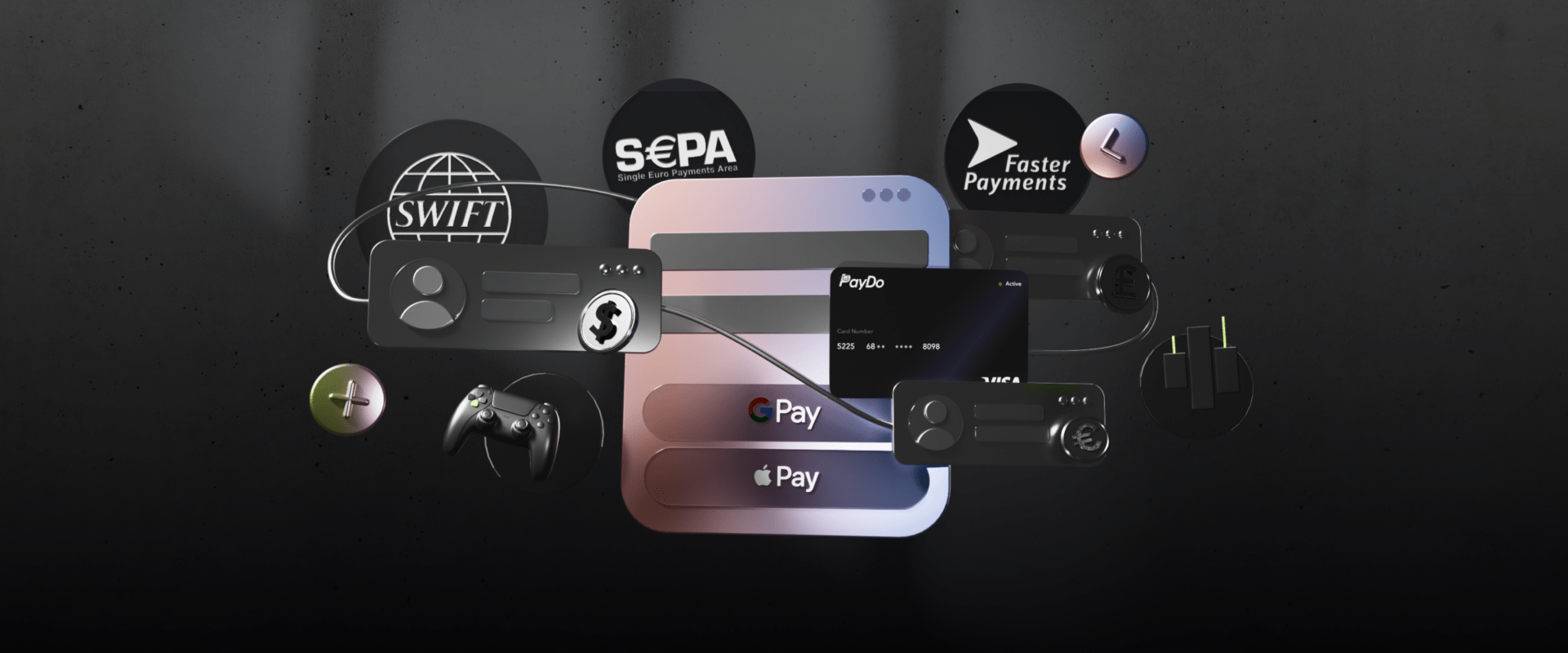
PayDo IBAN with Cross-border, SEPA, SEPA Instant, Faster Payments, and five more payment schemes.
60+ currencies with 150+ destinations.
And our high-risk clients get to enjoy these advantages of online banking:
No volume restrictions.
No hidden fees
No minimal commitments
No minimal balances
No nonsense requirements
All iGaming licenses (Curacao included).
In-depth understanding of high-risk industries.
Curacao and other licenses supported
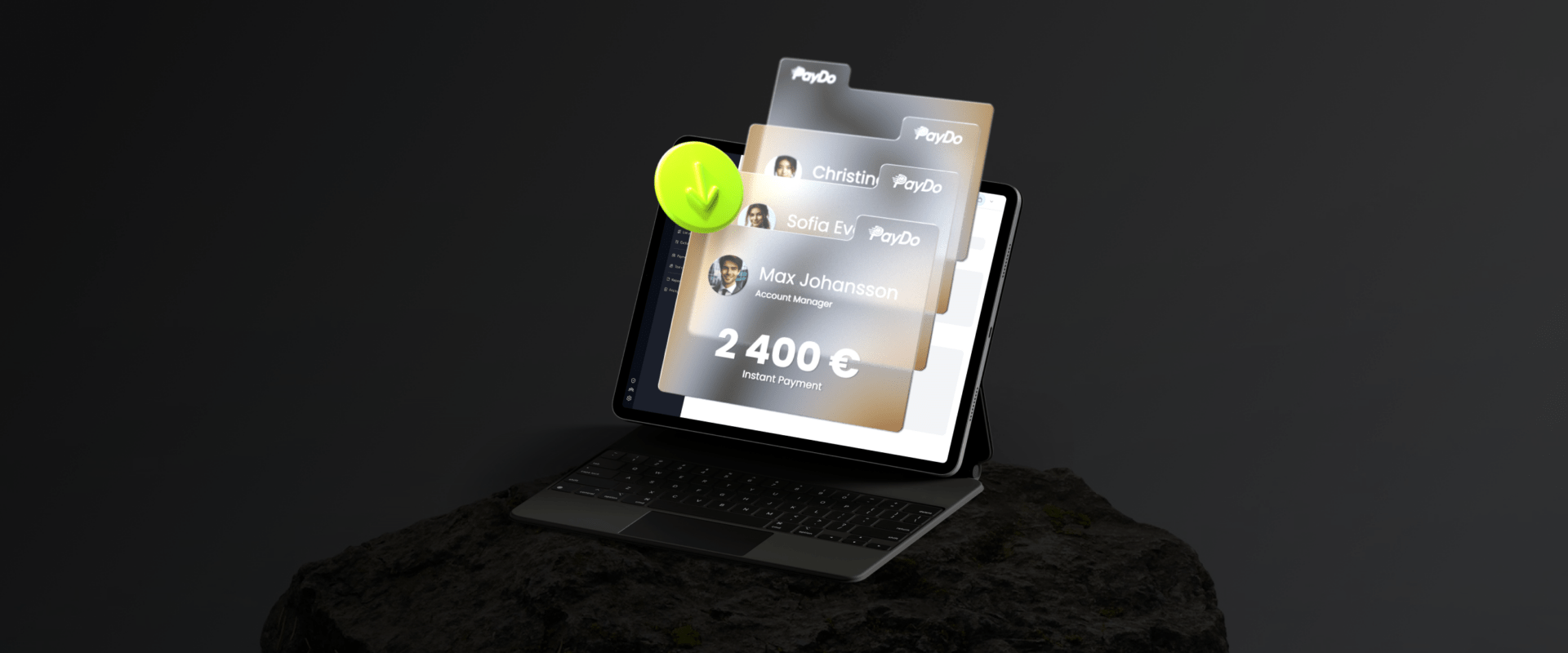
A dedicated account manager with extensive experience in iGaming
Momentary payouts
Scheduled payments
PayDo is authorised by the FCA, MFSA, and FINTRAC. Client funds are kept in safeguarding accounts with tier-1 European banks, and operations are backed by PCI-DSS Level 1 certification.
The advantages of using electronic banking are too obvious and too numerous to assume that online banking is a trend that will eventually go away. Far from it; we are witnessing a financial revolution that is about to become the new norm alongside traditional banking.
Looking at the pros and cons of digital banking, it is easy to see that the benefits are abundant enough to give this new approach a try. Reach out to PayDo to start your online banking journey today.
FAQ
Is online banking safe?
Online banking is not immune to cyber attacks, and hackers constantly evolve their methods. It is a constant race of innovation between the attackers and the banking apps’ security, but mobile banking is generally considered safe. While things like choosing a strong password and keeping it a secret are the user’s responsibility, methods like tokenization are near impenetrable and guarantee maximum security.
What are the benefits of online banking?
The main benefits of online banking are convenience, speed, flexibility, and low operational costs. Online banking services operate even during the times when offline branches are closed, and offer instant access to the full scope of banking services as long as the user has internet access. The fees incurred by online banking transactions also tend to be lower than those associated with traditional banking.
Is online banking good for small business?
Yes, there are many benefits of online banking for small business. The convenient nature of open banking allows small business owners to resolve multiple issues on the go, and lower operational costs mean that small companies can keep as much of their revenue as possible. Unlike traditional banks, apps of the new fintech generation and digital-first banks can even have special offers for small business owners, like access to a data hub or community of other entrepreneurs.
What do customers gain from using online banking to pay for goods and services?
The core benefits of digital banking for customers are the ability to pay with digital wallets, support of one-click payments, clear records that serve as proof of purchase, and the overall increased control over how the money is spent. Digitalization also makes it easier to perform recurring payments and sign up for subscription-based services, as well as cancel these subscriptions.
The 30-Second Summary The fastest way for a digital goods platform to pay sellers in Europe and the UK is an instant transfer: SEPA Instant for euros and Faster Payments...
The 30-Second Summary Low transaction fees look like the obvious way to compare payment providers. Skin store owners start with the rate on the price sheet because it is the...
The 30-Second Summary A payment gateway for a game key store has one job: get buyers’ card payments approved and keep the account open as volume grows. For game key...
The 30-Second Summary SEPA Instant sends euros within the SEPA area in up to 10 seconds, 24/7. SWIFT works in almost any currency, but a transfer usually takes 1–2 business...
The 30-Second Summary In the fast-paced and ever-changing iGaming industry, what are the current best online casino payment methods? Today, we are taking a snapshot for 2025, when the iGaming...
The 30-Second Summary A Money Services Business (MSB) is a type of financial institution that offers various money-related services, such as money transfers, currency exchange, and check cashing. It is...
The 30-Second Summary Electronic Money Institutions (EMIs) and Money Services Businesses (MSBs) are becoming more and more popular. EMIs focus on digital transactions, providing electronic payment services and digital currency...
The 30-Second Summary Phishing remains a major cybersecurity threat, targeting individuals and businesses through fraudulent emails, messages, and websites. According to the Anti-Phishing Working Group (APWG), 3.8 million phishing attacks...
The 30-Second Summary As digital payments continue to grow, payment fraud remains a significant concern. According to Alloy’s 2026 State of Fraud Report, 67% of surveyed financial institutions and fintechs...
The 30-Second Summary A bank account ownership certificate, also known as a bank account certificate or proof of account ownership, is a document that says your bank account actually belongs...
The 30-Second Summary A Company Registration Number (CRN) is a code a business gets during incorporation. It acts as a distinct identifier for your company. It helps to differentiate your...
The 30-Second Summary Imagine each bank branch with its unique postal code — that’s what a branch code or sort code is in the financial world. It’s a set of...