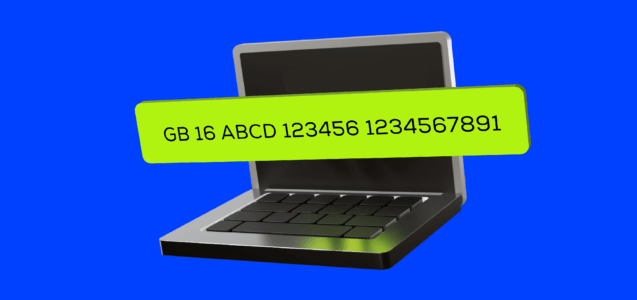

IBANs (International Bank Account Numbers) are the standards for internal money transfers in many countries, including the entirety of the EU, but Canada relies on a different set of systems for banking and money transfers. Instead of IBANs, Canadians typically use Cross-border codes (also known as BIC), routing numbers, and account numbers.
While Cross-border transfers work perfectly well for most international transactions, there is still merit in having an IBAN while based in Canada. Let’s answer why, and see how to get one.
Reasons for Getting an IBAN in Canada
Here’s why a Canada-based business might prefer using IBANs:
Less errors and more security
IBAN’s widespread legally mandated adoption creates a wider net of regulations. Cross-border codes are used by less countries and lack IBAN’s error detection features, so as a Canadian you could have Cross-border for intuitive convenience, and IBAN for maximum security.
Simplifies SEPA transactions
The Single Euro Payments Area (SEPA) is a key framework for euro-denominated bank transfers. This system brings international euro transactions the simplicity of a local transfer, and tends to be faster than Cross-border. Having an IBAN—especially one connected to a European account—lets you participate in SEPA with all of its perks.
Boosts international credibility
Providing an IBAN in addition to your usual payment information signals to clients and partners that you’re open to a wider pool of international transactions. This can make your business appear more client-oriented and established globally. The European Union and many other countries use IBANs as their go-to method for international transfers. If you frequently send or receive money from these regions, choosing the system that simplifies these processes for your clients signals accommodation.
Check an IBAN before you send money
Validate any IBAN in seconds with our free IBAN Checker.
Check an IBANHow to Get an IBAN in Canada
While Canadian banks don’t issue IBANs, there are ways to obtain one through international banking services and fintech platforms.
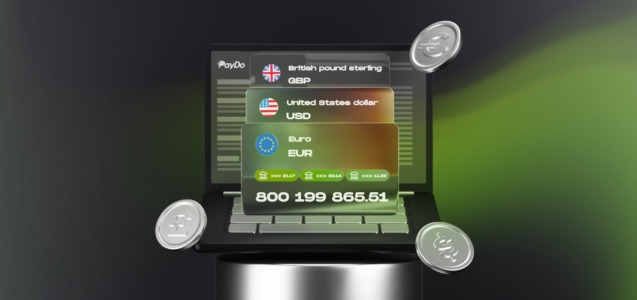
- Choose a global fintech or EMI that offers IBANs. Look for Electronic Money Institutions that provide multi-currency virtual accounts, including IBANs. For example, PayDo offers Canadian business accounts virtual IBANs, with account requisites tailored to 12 currencies.
- Sign up and complete KYC verification. You’ll need to go through a basic Know Your Customer (KYC) process, which includes identity verification and proof of business registration.
- Select your desired IBAN currency (e.g., EUR). Most platforms will let you choose from multiple currencies. For SEPA or EU transactions, EUR is the go-to.
- Provide required business details. You will need to share business registration documents to proceed.
- Receive a virtual IBAN. Once approved, you’ll get a virtual IBAN that functions like any other IBAN for sending and receiving international payments.
- Start sending/receiving international payments. Use your IBAN for invoicing, payroll, supplier payments, or receiving funds from overseas clients.
Alternatives to IBAN in Canada
Even if you don’t have an IBAN, there are still several ways to manage your payments in and out of Canada.

Cross-border/BIC Codes
The standard for global wire transfers, these codes are used in most Canadian banks to process international payments.
While Canada primarily uses Cross-border codes for inbound and outbound transfers, not all Canadian banks have their own unique Cross-border code. That’s when intermediary banks step in to complete the transaction, which can delay processing times and cause additional fees. On average, foreign banks will charge up to 10% of the transferred sum to complete the transaction, which is sure to sting.
For international transfers, exploring various fintech platforms can save lots of money.
Fintech Platforms
Companies like PayDo offer efficient, cost-effective ways to send and receive money internationally—sometimes even without needing an IBAN, depending on the corridor. Additional features you can unlock by getting an account with a fintech platform are:
- local receiving accounts in multiple currencies;
- faster transfers than traditional banks;
- inbuilt support for Cross-border and SEPA payments;
- integration with online marketplaces.
Conclusion
While Canada doesn’t natively use IBANs, it’s entirely possible—and often beneficial—to obtain one through a provider. Whether you’re a freelancer working with European clients, an eCommerce brand expanding into new markets, or a business that frequently deals with cross-border payments, having an IBAN can improve the speed, security, and credibility of your global transactions.
PayDo operates under FINTRAC regulation for Canadian clients, offering multi-currency accounts and dedicated IBAN options. With a fast onboarding process, global infrastructure, and friendly UI, getting an IBAN in Canada has never been easier.
Ready to expand your global reach? Start by choosing the right partner—and make international payments feel local.
Get an IBAN in your company's name
Receive SEPA and SWIFT payments to a dedicated IBAN and hold balances in multiple currencies.
Get a business IBAN