The Society for Worldwide Interbank Financial Telecommunication (Cross-border) and the Single Euro Payments Area (SEPA) are two main international payment schemes for sending cross-border transfers. These play a vital role in the global financial system. Here’s some evidence to support this statement:
According to Statista, the number of Cross-border payments processed daily reached nearly 50 million messages.
As of 2024, instant payments account for approximately 12% of SEPA’s total credit transfer volume. Projections suggest that, with favorable regulatory changes, this could rise to 45% by 2027, significantly increasing from the current levels.
This article explores the key differences and similarities between the two payment schemes. Both systems have evolved to meet the demands of global commerce and streamline international transactions. Understanding their unique features and how they cater to different audiences can benefit businesses and individuals in today’s interconnected world economy.
What is Cross-border?
Cross-border is a system that banks worldwide use to send money and messages to each other safely. It’s like a special service helping banks communicate clearly and securely. Banks use a special code to identify each other in this system, ensuring the money reaches the right place.
This system is used for many bank transactions, including transferring money from one country to another. It’s known for being reliable, which means people can trust it to handle their money transactions without problems. Cross-border is a vital tool in the global banking world, helping to keep money moving smoothly and safely between banks in different countries.
What is SEPA?
SEPA is a system that makes sending euros between European countries easier. It was created to make all euro payments in this area as simple as paying within one’s own country. This means that whether someone transfers money to a family member in another country or makes a business transaction, it can be done quickly and easily, just like a local transfer.
SEPA covers credit transfers (like online payments), direct debits (automatic withdrawals), and card payments, making it a one-stop solution for various transactions. It’s a step towards making Europe’s financial system more united and efficient, ensuring people and businesses can move money around without fuss.
What are the main differences between Cross-border vs SEPA?
Both are systems that help people transfer money, but they work in different ways and have different features. Here are some key differences between them:
Cross-border
SEPA
Where They Operate
Operates globally, allowing money transfers in various currencies across more than 200 countries.
Focuses on European countries, specifically facilitating euro transfers among 36 member countries.
Scale and Reach
Used by over 11,000 banks and financial institutions globally, making it a widely used network for international transactions.
Primarily a pan-European system, helping to unify and streamline euro transactions within its member countries.
Transfer Details Required:
Requires detailed information, including the Bank Identifier Codes (BIC), Cross-border codes, and other specifics about the recipient’s bank.
Simplifies the transfer process, not necessitating BIC or other intricate bank details for transfers.
Speed and Convenience
The transfer time can be longer, especially involving multiple currencies and several intermediary banks.
Offers fast, convenient, and hassle-free transfers, often completing transactions within a business day.
Usage
Frequently used for various kinds of international transactions, including business and personal transfers.
Primarily used for personal and business euro transfers within the designated European region.
Understanding these differences can help you choose the right service for your needs, whether you want to send money internationally or within Europe. It also helps in planning the transfers more effectively, considering the speed and the information required by each system.
What countries are included in the SEPA zone?
The SEPA countries include the 27 European Union (EU) member states and a few additional countries.
European Union (EU) Member States:
Austria
Belgium
Bulgaria
Croatia
Cyprus
Czech Republic
Denmark
Estonia
Finland
France
Germany
Greece
Hungary
Ireland
Italy
Latvia
Lithuania
Luxembourg
Malta
Netherlands
Poland
Portugal
Romania
Slovakia
Slovenia
Spain
Sweden
Non-EU Members:
Iceland
Liechtenstein
Norway
Switzerland
Monaco
San Marino
Andorra
Vatican City
United Kingdom
What countries use a Cross-border code?
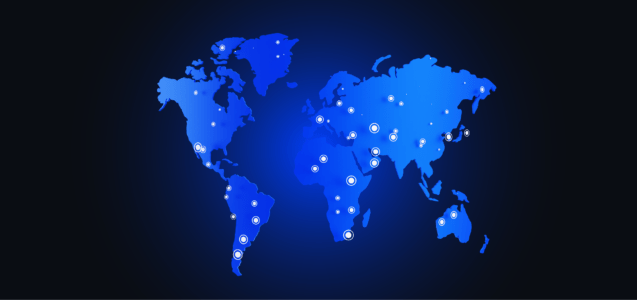
BIC codes are used by financial institutions in virtually every country worldwide to facilitate international financial transactions. The payment scheme operates in over 200 countries and territories, encompassing a large network of banks and financial organizations globally. The geographical spread where Cross-border codes are used:
North America. Including countries like the United States, Canada, and Mexico.
South America. Encompassing countries such as Brazil, Argentina, and Chile, among others.
Europe. Including nations like the United Kingdom, France, Germany, Spain, etc.
Asia. Incorporating countries such as Japan, China, India, and South Korea, among others.
Africa. Including countries like South Africa, Nigeria, Kenya, and more.
Australia and Oceania. Comprising countries such as Australia, New Zealand, and several Pacific island nations.
Middle East. Including countries like the United Arab Emirates, Saudi Arabia, and Qatar, among others.
How does Cross-border code work?
Cross-border codes play a vital role in international financial transactions. These codes are essentially the addressing system that helps in the smooth and accurate routing of money transfers between banks globally.
Such code is typically an 8 to 11-character alphanumeric code. The first 4 characters represent the bank code, the next 2 characters represent the country code, followed by a 2-character location code, and optionally, a 3-character branch code. This is how it works.
1. Identification of Parties
Sender. A person or entity that wants to send money internationally initiates the transaction, providing the recipient’s banking details, including the Cross-border code of the recipient’s bank.
Recipient. The person or entity that will receive the funds. Their bank’s Cross-border code is required to ensure the money reaches the correct institution.
2. Generation of Cross-border Message
Message Creation. The sender’s bank creates a Cross-border message, which is a standardized format containing all necessary details about the transaction, including the recipient bank’s Cross-border code.
3. Transmission of Cross-border Message
Sending the Message. The message is transmitted through the Cross-border network, a secure financial messaging service, not a funds transfer system.
4. Action by the Recipient’s Bank
Receipt of Message. The recipient’s bank receives the Cross-border message, which contains instructions for the transaction.
Funds Transfer. Based on the instructions in the Cross-border message, the recipient’s bank arranges the transfer of funds from the sender’s bank to the recipient’s account.
5. Completion of Transaction
Notification and Credit. The recipient is notified, and their account is credited with the transferred amount.
Please note, if you already have PayDo Business Account, you can find Cross-border/BIC code following these instructions:
Access your PayDo Account.
In the dashboard, go to Account Details.
Under the Dedicated section you will find your IBAN/Cross-border codes.
Conclusion
Cross-border and SEPA are two prominent systems facilitating money transfers, each catering to different geographical and transactional needs. It is important to understand their key differences:
Geographical Scope. Cross-border has a broader global reach compared to SEPA’s focus on the European region.
Currency. Cross-border facilitates multi-currency transactions globally, while SEPA is confined to euro-denominated transactions.
Speed. SEPA generally offers faster transfer times, especially for transactions within the SEPA zone, compared to Cross-border’s varied transaction speeds.
The choice between Cross-border and SEPA transfers would depend on the transaction’s nature, with SEPA being more suitable for euro transactions within Europe and Cross-border being apt for broader international transactions. Please contact our support team to get information on how to use both SEPA and Cross-border with PayDo.
The 30-Second Summary The fastest way for a digital goods platform to pay sellers in Europe and the UK is an instant transfer: SEPA Instant for euros and Faster Payments...
The 30-Second Summary Low transaction fees look like the obvious way to compare payment providers. Skin store owners start with the rate on the price sheet because it is the...
The 30-Second Summary A payment gateway for a game key store has one job: get buyers’ card payments approved and keep the account open as volume grows. For game key...
The 30-Second Summary SEPA Instant sends euros within the SEPA area in up to 10 seconds, 24/7. SWIFT works in almost any currency, but a transfer usually takes 1–2 business...
The 30-Second Summary In the fast-paced and ever-changing iGaming industry, what are the current best online casino payment methods? Today, we are taking a snapshot for 2025, when the iGaming...
The 30-Second Summary A Money Services Business (MSB) is a type of financial institution that offers various money-related services, such as money transfers, currency exchange, and check cashing. It is...
The 30-Second Summary Electronic Money Institutions (EMIs) and Money Services Businesses (MSBs) are becoming more and more popular. EMIs focus on digital transactions, providing electronic payment services and digital currency...
The 30-Second Summary Phishing remains a major cybersecurity threat, targeting individuals and businesses through fraudulent emails, messages, and websites. According to the Anti-Phishing Working Group (APWG), 3.8 million phishing attacks...
The 30-Second Summary As digital payments continue to grow, payment fraud remains a significant concern. According to Alloy’s 2026 State of Fraud Report, 67% of surveyed financial institutions and fintechs...
The 30-Second Summary A bank account ownership certificate, also known as a bank account certificate or proof of account ownership, is a document that says your bank account actually belongs...
The 30-Second Summary A Company Registration Number (CRN) is a code a business gets during incorporation. It acts as a distinct identifier for your company. It helps to differentiate your...
The 30-Second Summary Imagine each bank branch with its unique postal code — that’s what a branch code or sort code is in the financial world. It’s a set of...