In an era where digital transactions are the backbone of the global economy, the e-commerce sector is experiencing unprecedented growth. With projections indicating that global retail e-commerce sales will soar to $8.1 trillion by 2026, fast and flexible solutions for processing and settling funds from customer purchases have never been more pressing.
Based on our experience of working with clients in e-commerce, PayDo has witnessed numerous cases showing companies constantly looking for international payment solutions that are fast and flexible for fund settlement. Here, we will show how PayDo can deliver its clients exactly what they want.
The Challenge
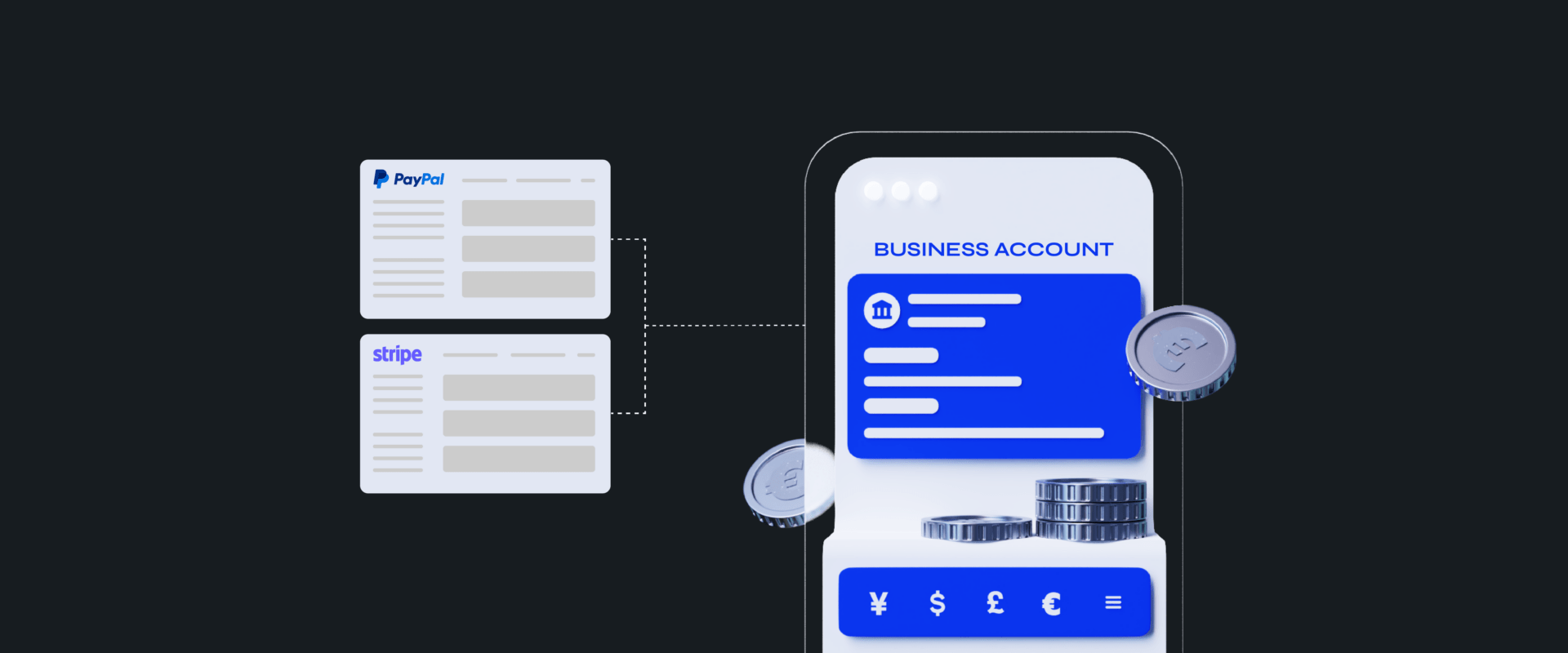
Looking at a particular case, PayDo collaborated with an e-commerce business, receiving funds from customers on PayPal, Stripe, and other payment service providers (PSPs). While the company could process funds on its merchant account in different PSPs, it faced the challenge of withdrawing funds.
We know that to settle the funds earned as an e-commerce merchant, one must have a bank account in the same LLC specified in your PSP account. To make this happen, an e-commerce business must open an account with a bank or an EMI (Electronic Money Institution) and link bank account details to the PSP account. The problem here—banks usually take a long time to open an account. It is the moment when PayDo steps in with its solution.
The Solution
Understanding the distinct challenge e-commerce businesses face, PayDo worked out this three-step process as a solution:
Step 1. Open a Business account for your LLC
Begin by remotely opening a PayDo business account in your company name. Our client can get the advantage of multicurrency accounts in 6 currencies (EUR, USD, GBP, AUD, CAD, DKK) with 150 destinations in the outreach. Soon enough, we will add 7 more currencies (CHF, PLN, NOK, SEK, CZK, HUF, RON). Besides, the account has transparent foreign exchange operations and a user-friendly online platform.
Step 2. Verify Your Account
After your business account is in place, a client needs to complete a pivotal step—account verification- to get access to the account’s full potential. PayDo offers a fast semi-automated verification that can be completed in 5 business days.
Step 3. Accept Settlements
Upon successful verification, an e-commerce business with a PayDo account can withdraw funds from various PSPs. The critical aspect here is—to verify your PayPal account, you only need to link PayDo business account details. To illustrate, if you plan to have a PayPal account in the UK, you need to present UK local account details to register such an account.
In that case, we offer UK local account details you can use to verify a PayPal account. Once verified, all funds allocated to your PSP account can automatically be withdrawn into your PayDo business account. Besides, if you want PSP accounts registered in other countries, we also offer international account details. With PayDo, you get the following:
- PSPs like PayPal know that an e-commerce business withdraws money to a verified electronic money institution (EMI) – PayDo.
- A merchant knows that one can get a settlement without the delay of opening a bank account and linking its details to a PSP account.
The Results
We give trustworthy account details accepted by giants like PayPal and Stripe. In one solution, PayDo covers both processing and settling. All money processed through checkout can be withdrawn to a PayDo account. It will save time and costs. Our experts invested a great deal of time and effort to ensure our clients operating in e-commerce have all they need to accept payments online and withdraw money with the least obstacles possible.
Open your PayDo business account right away and take your e-commerce business to the next level.