According to Statista, the total e-commerce revenue in the United Kingdom alone will reach $194 billion by 2027. In other words, the industry is booming. Yet, to tap into it, one should know several important tips and tricks.
In this case, we review one of the key bottlenecks – the challenges an e-commerce company can face when opening a multicurrency business account for purchasing goods. As a solution, we will outline the instruments PayDo provides to deal with the challenge at hand.
The Challenge With Multicurrency Business Account
1. High upfront costs
We know that e-commerce businesses need suppliers worldwide to buy goods at a better resale price. To make payments, getting a convenient multicurrency business account that can handle transfers in the countries that matter to your company is better. However, opening a multicurrency business account for an e-commerce company can be challenging.
In addition, setting up a multicurrency account with most banks and EMIs can be expensive. These financial institutions often impose additional charges for each extra currency or payment method an e-commerce company requires.
In scenarios where an e-commerce company needs to pay its global suppliers, adding all the necessary currencies can result in significant costs. Additionally, due to the extensive documentation and verification procedures involved, it can take a considerable amount of time for a financial institution to establish a multicurrency account for e-commerce purposes.
2. Complex documentation requirements and lengthy approval process
Each country has its own set of regulations for opening a business account, so you’ll need to gather a lot of paperwork. This may include:
- tax forms;
- personal identification information;
- other company documents.
Often, you need to deliver these documents to a bank physically.
The business account opening process with a traditional bank can take up to 6 months. In addition to the 2-3 months spent for account verification, one should factor in such nuances as visa applications, bank appointments, and document legitimization.
3. Checkout and Payouts
Checkout and payouts in e-commerce can pose challenges when dealing with different manufacturers and suppliers. Suppliers may prefer different payment methods and providers, complicating the checkout process. Maintaining consistent pricing across multiple suppliers can be challenging, especially when dealing with different currencies or pricing structures.
The Solution
As per PayDo’s experience, international purchases online with a multicurrency account can be a great way to grow incomes and save money for e-commerce businesses. It includes increased market reach, different price points, and new opportunities.
While understanding the pains e-commerce businesses face when looking to work with different manufacturers and suppliers in multiple currencies, PayDo offered this multifaceted solution:
1. PayDo Business Account
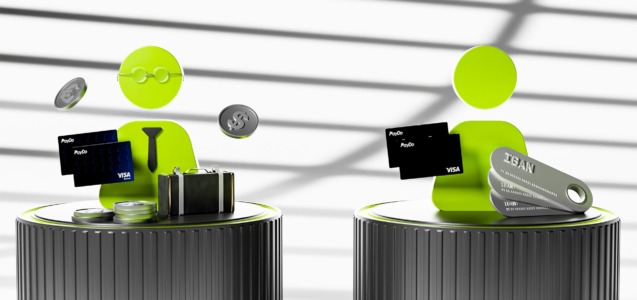
When companies open a multicurrency business account with PayDo, they receive a dedicated IBAN. This is especially useful for handling high-risk transfers and making global payments to contractors. A dedicated IBAN can do that in 35+ currencies.
The multicurrency business account with a dedicated IBAN allows our clients to use SEPA, SEPA Instant, Cross-border, Fedwire, and Target2. In addition, PayDo also provides local account details, granting access to FasterPayments, Chaps, and Backs for the UK and Kronos2 for Denmark.
2. Relevant documentation requirements and fast verification
It takes up to five days and a standard package of documents to open a business account for e-commerce. Since PayDo fully comprehends the number of challenges for such companies, we only request the documents that fit your current business model.
3. Checkout and Mass Payouts
Managing deposits and mass payouts presents a significant challenge for any e-commerce. These platforms must exhibit flexible payment methods to ensure a great user experience. Furthermore, integrating deposit and payout options into a unified interface is crucial for enhanced convenience.
PayDo provides all payment methods your customers need in one place and, with only one contract, offers the following solutions:
- All-in-one contract & integration
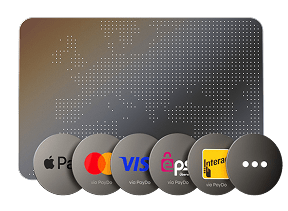
- 350+ payment methods for customers
- 150+ supported countries
- Unlimited Websites within 1 account
With PayDo, e-commerce can be confident that they are using a secure and reliable payment solution that meets the needs of their business.
The integration process commences immediately upon a merchant’s activation of a business account with PayDo, following the company’s and website’s verification and successful completion of the KYC process. Subsequently, the checkout process and mass payouts can be integrated via a single API.
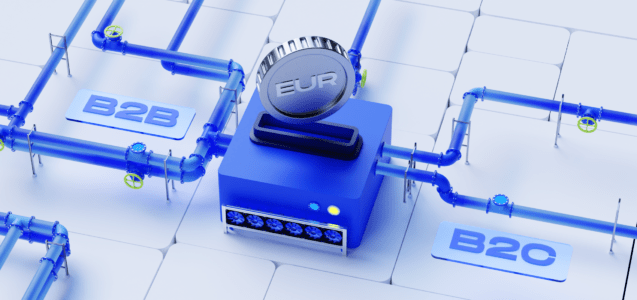
This approach provides access to a comprehensive array of major payment methods through a single contract and dashboard, enabling e-commerce to deliver the ultimate user experience to their clients.
The Results
PayDo ensured its business account met e-commerce businesses’ needs to choose between manufacturers and suppliers from different countries flexibly. Besides introducing nine payment schemes and six currencies, PayDo is out there to help e-commerce companies conduct their business with manufacturers and suppliers in multiple currencies.
Break the e-commerce barriers by getting advanced solutions through PayDo, and send your request today!